Book Pilgrimage

Honouring an internal ‘fluttering’ that began last year, I booked myself into 3 days at New Norcia Monastery’s guest house.

Before travelling by coach, I intuitively selected two books from my collection as the source material to ignite and explore an inner response whilst away. They were very different, but interestingly both pointed to the power of ‘Woman’ to nurture and guide in a point in time hijacked by power, authority, and control. Jean Shinoda Bolen likened our times to the myth of ‘The Fisher King’ and the desolation experienced when cut off from Self/Soul/Goddess. At Midlife, the invitation to reconnect makes its presence known. Turning inward ignites a small light in an individual and collective ‘dark night’.

Whilst staying true to the purpose of my time in New Norcia took deliberate decision making in regards to external distractions, I did allow myself one call at the end of the first day with someone I regard as ‘in my tribe’. We both respect the wisdom that resides within and are aware of the pitfalls of a ‘busy head’. We shared understanding that had surfaced in the week prior, got curious and allowed whatever moved through us to be voiced. The conversation was deeply nourishing and ignited the possibility of taking regular ‘book pilgrimages’ with other women, with time dedicated for us to read, write, and at the end of the day share personal ‘internal greening’.

The challenge is to stay true to the intention. Honouring an inner world of feelings, intuition, truth and ‘body’ knowing has become ‘forbidden fruit’. Finding venues that provide a suitable container (grail) can also be challenging. Solitude, quiet, comfort and care, in Nature are all needed to minimise external demands on our minds. I have booked myself into a different venue at the beginning of April but am sure to return to New Norcia for another 3 day immersion again during the year – maybe with other women?

2026 feels different. I have let go of some work that no longer feels right. I am changing in my expectations of myself and of work that I will continue to do. My care priorities are changing, including care for myself, the latter introducing some very new and different ways of being, and working. Time invested in external development will be limited while time set aside for inner communion will increase. Rituals to mark transitions in the day and seasons may be explored. I also feel prompted to explore our Indigenous six seasons and how climate change may be impacting. The year ahead feels right.

Muffled

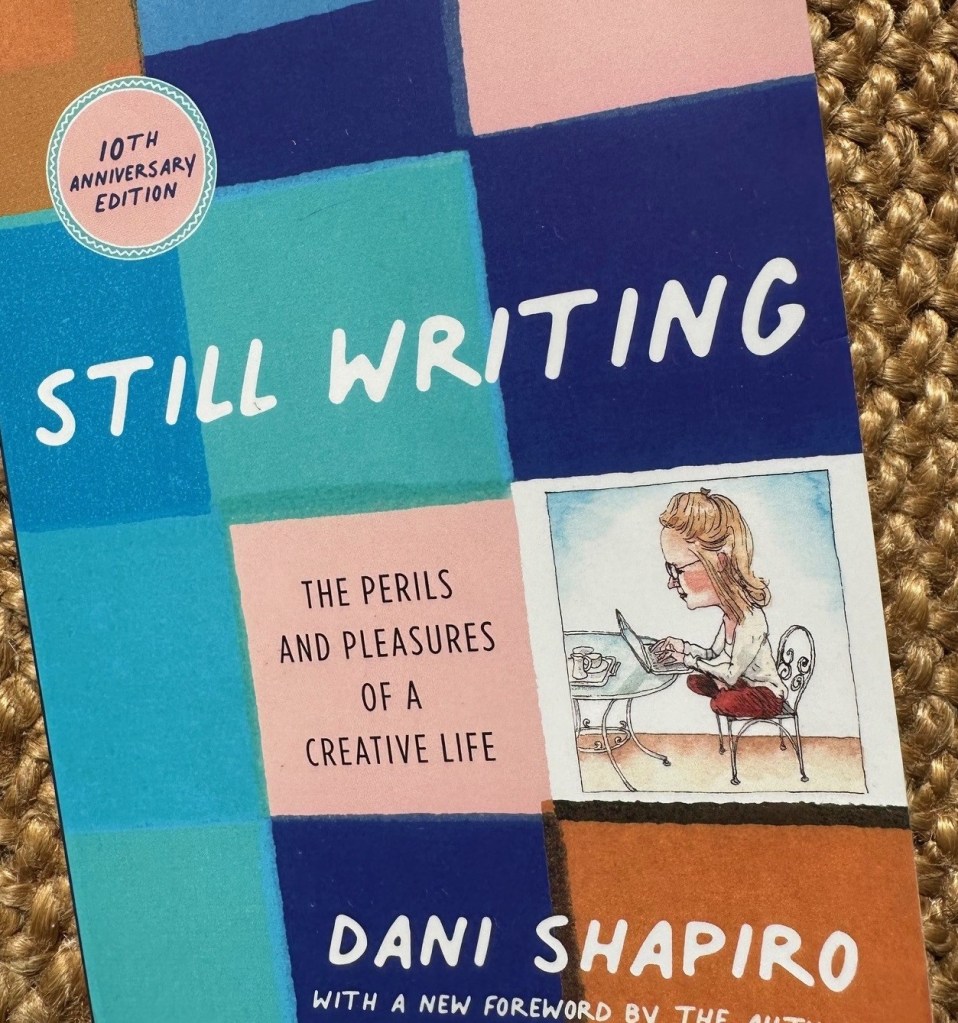
In her book ‘Still Writing – The Perils and Pleasures of a Creative Life’, Dani Shapiro writes about her overuse of the word ‘muffled’ in one of her novels. She realises that in unconsciously repeating the word, she is not close enough to the interior life of her main character.

None of us are close enough to the interior life of the main character in our lives – ourselves. Socialisation, early attachment, temperament, and life experiences all play a significant part in creating psychological obstacles to that realm. We develop habits in keeping ourselves distant from it and we learn ways of communicating and relating that come from thoughts filed away in heads guillotined from what we know in our being.

Earlier last week I was interviewed for a counselling position servicing people with extensive needs. I was asked if I had worked with people who lived with Disassociative Identity Disorder or PTSD. Instead of talking about my lived experience of working with these clients, I spoke from the head, and as I spoke I could feel the energy of genuine conversation depart.

Why did I not talk about my experience with listening? About my experience with hearing each person’s story and validating their hero’s journey with survival? With the difficulties in countering the medical model’s interpretation and the sense of hopelessness it brings? With listening for small ‘windows’ in which to open up different ways of understanding? Of the challenges in creating a safe space and of the stretch I must make if I am to grow enough for them? And all this before embarking on the tools and techniques psychologists are trained in.

Because I forgot to get close to my interior life, the repository of what I know from lived experience. I had forgotten to have a conversation with myself in my journal about what I know about my work with this client group. I had forgotten to harvest my experience; my knowing; my wisdom.

Whether we are writing a book, or being interviewed, or parenting children, or talking with our loved one, none of us escape the potential to fall into the trap of evading the depth and breadth of our own interior life. And when we do, we don’t ‘ring true’. Our words don’t resonate, not with ourselves, nor with others.

Journal writing has been my portal for getting closer to and clearer from my interior life. That job interview reveals I have further to go. How can we talk about what WE consciously know if we don’t turn to the vast amount of unconscious material within and ask? A job interview is not the place to explore what I know. There isn’t the time – to develop rapport or to follow trains of thought until wisdom is revealed. The stakes are too high. And not enough inner exploration has been done to truly ascertain ‘fit’.

Whenever we need to relate to another about something important, it’s important to distill our inner reality about the situation before we embark upon an exchange of feelings, needs, and wants. What is your truth about your relationship with a job? Another person? A responsibility? What needs and wants are tangled up with that ‘other’? Should they be met in that relationship or elsewhere? What might the ‘other’ want from you? What do you want to give?

If we don’t take time to explore our interior lives we can present as ‘muffled’ or at the other extreme ‘rigid’. Familiarising ourselves with our interior realities provides a starting point, one that feels ‘real’, and one from which an exchange, an openness to altering, can occur. Get closer to the interior repository of your lived experience. Write about it, explore how the threads come together and reap the insights that land – before sharing it with another.

Mess

Sometimes we make ‘thinking’ mistakes about the mess in our lives.

That thinking can cause more damage than the mess itself.

That thinking can bring the living of our lives to a halt.

Mess is just mess, problems to sort out, and move through. But if we mistakenly think that mess is a reflection of something negative about ourselves, i.e. we make a detrimental judgement of ourselves based on the mess, then we increase the risk of shutting down our capacities for resolving the mess and instead replace it with shame. Shame shuts us down and we get stuck.

FootpathIt has taken me a while to see this folly clearly and to consciously move through it. Years ago, whilst living in an uncaring, unhealthy relationship, I changed from a confident, independent, professional woman to a frightened, confused shell of my former self. I shivered within but pretended to the outside world that I was okay whilst at the same time withdrawing from everything that supported me, nourished me and reflected who I truly was. My thinking stalled me (for a number of years) and the mess worsened. Eventually, I responded to what I was doing to myself, disconnected from the relationship and slowly reconnected with affirming activities and people.
I run a small and hopefully nurturing life writing group for women. Writing our stories and voicing them allows us to explore and experience deeper and bigger definitions of ourselves. Being part of a nurturing and accepting group also offers each of us affirmation and the possibility of ‘hanging in there’ when our lives slip into mess.

I suspect no one avoids periods of intense mess in their lives. We can slip into it in the blink of an eye. Many of us think we are the only ones in a mess. This is not true. Mess happens. And when it does, it’s important to stay actively connected to people, groups, and activities that affirm who we are.

We are not the messes we find ourselves in. We are the person that others like, that others invite into their lives, that others call on the phone, that our dogs love, that our neighbours say hello to, that people recognise on the street, that others care about. Be that person and ways to navigate through each mess will become clear. Judge yourself negatively on the basis of the mess and know that it is not the mess that has done you in. Your thinking has.

Discontent is Just a Habit

Malcontent, or discontent, is a habit in thinking. Even if you personally think it isn’t, does it matter? We all create our feeling states via the thinking we host. Those thinking states translate into behaviours – including the ones that don’t help us get on with life. We all have periods of discontent. So what? My conclusion with my own moments of moroseness is to do something that ‘gets on with my life’. How I feel is irrelevant.

Catherine Deveny, in her book ‘Use Your Words‘, has a chapter on another habit, ‘Procrastination’. Whatever reasons we make up about why we procrastinate, her point is that in real life we can’t avoid the need to do things to keep our lives going. If we indulge our habits, that indulgence incapacitates.

Notes tim-bish-Irvc7o5Bang-unsplash

Deveny suffered from depression. In a desperate attempt to get better she bought $350 worth of self-help books. In one of them, she found this little nugget – ‘pocket notes’. Turns out that writing a little note can provide an antidote to a bad habit. Carry it around and look at it a number of times during each day. You might be surprised at the impact.

In my world of understanding, that note acts as a circuit breaker, distracting your thinking from its habit, and frees your mind to consider alternatives. Follow the circuit breaker and you break your connection to the thinking behind the habit. You break your habit of indulging your habits!

The example about ‘pocket note therapy’ Deveny quoted pertained to weight loss but it got me thinking about what my ‘pocket note’ could look like for discontentment.

‘Leave your morose thinking alone – it’s not important.’

‘Do one thing to get on with life before you give in to inaction – every time.’

‘Turn off the TV after an hour.’

‘Only use Twitter to post information – no surfing.’

‘When you feel like a glass of wine, drink a large glass of bitter lemon and water.’

If I follow my ‘pocket note’ every day, my life moves forward. I am more creative, I meet new people, my relationship with my daughter is closer and I feel more energized. My only commitment is to follow the advice when discontent surfaces – as it will. Much, much better than feeding the habit of malcontent. What’s the habit that stalls your life – every time? What simple actions could your ‘pocket note’ contain? Are you willing to give it a go?

Photo by Tim Bish on Unsplash.

A Feeling of Unease

Sometimes a general feeling of unease comes over me, and I am unable to shift it. I know it is just thought but knowing that doesn’t make a difference. Sometimes the feeling shifts with a good night’s sleep, but sometimes I get many good nights’ sleep and the feeling continues anyway.

On those occasions, writing in my journal works. But I cannot approach the writing trying to analyse my experience from the inside out ‘understandings’ that I know. Trying to interpret my experience in those moments through those understandings does not work. But if I approach my writing with an open mind, allowing my thoughts and writing to meander where they will, without ‘imposing’, something magic happens. Staying in the openness is different to staying in what I already know. Staying in the openness is where I discover and see anew.

Writing is a process of discovery. Thought is both conscious and unconscious and possibly everything in between.  If I am caught up in unconscious thinking, then perhaps an open writing process in which I am guided by wisdom/possibility/thought from beyond my usual habits can bring clarity to the surface, both about the thoughts building the feelings of malaise, and the possibility that awaits. Writing allows form to emerge around both. When possibility births into form, my experience changes. I change.

This morning’s journal writing brought clarity to both. I began by writing down what occupied my mind. I had been reflecting upon my personal states of mind that weren’t comfortable and wondered if a better state was more accessible. I recalled a quote from Syd Banks which I attempted to locate through someone I follow on Twitter, only to find that the quote could be saying something completely different to what I had understood when I read it. So I wrote that, I wrote about what it could mean and what I thought it meant. My mind then moved on people and events currently in my life. I kept writing what surfaced. I stayed honest with myself and before long some interesting thoughts emerged that I had not been aware of. “Oh, so that is what this is all about.” I continued with no censoring, just allowing the next thought to arrive and I recorded it.

I kept on in this way until the writing felt finished. I was clearer, I could now see some of the thoughts that had been at play. As nothing felt like it needed to be written I walked to the bathroom to take a shower. My thoughts were still floating through and as I turned on the hot water I had an insight about the words of another person and the meaning I was imposing onto those words. Ooh, another moment of liberation in which I could see how my thinking was contributing to the ill at ease feelings I was experiencing. An image of a different possibility for myself came in next, with such clarity that all the other stuff fell away. I had shifted.

IMG_0597

I wrote in my journal what had come to me in the shower. What do I know deeper from this experience? It doesn’t matter how much we understand how we create an inside out experience of life via thought, when we hit those times when we feel dispirited and have no clarity, be open to allowing thought to flow – even when what surfaces flies in the face of where an inside out understanding tells us to focus. The depth of our inside out understanding is also evolving. Each of us has to be true to what is unfolding for ourselves if we are to be part of a broader evolution. When working with writing, be open to starting somewhere and allowing your flow of thought to take you where you need to go.

Maybe our experiences of writing from a state of openness is the bigger teacher.

Journal Writing

In my experience, journal writing facilitates wisdom inspired personal change if:

(a) guidance is gently provided on how to write your words freely, without censorship, and how to ‘divine’ for wisdom that sits beyond;

(b) you have an opportunity to safely speak and hear your words that have unfolded from within; and,

(c) you have a structured opportunity to hear other people’s writing and heed words and phrases that resonate with you.

Powerful journal writing groups provide a ‘held’ space in which we hear something deeper in our own words and/or in the words of others.

In a nourishing journal writing group there is the writing, and listening. Listening to the words of ourselves and others, as against the words we have going on in our heads about others and ourselves, is the ‘soil preparation’ for a rich yield. When listening well, we drop the walls of thought about ourselves and others, about our stories, and we are left with openness and possibility. Here is where we find the seeds of something new. Tend them and life changes.

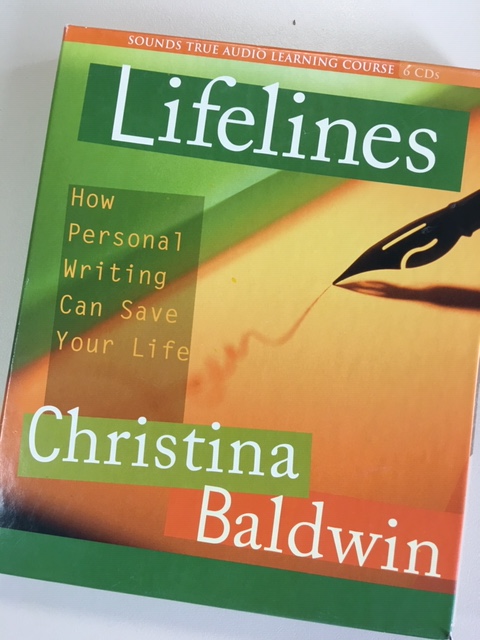
LifelinesBeginning Monday 8 April 2019 I will run a 12 week journal writing group, using immersive journal writing prompts from the CD learning course ‘Lifelines: How Personal Writing Can Save Your life’ by Christina Baldwin. Each session will be conducted from 10 am to 12 noon. Cost per session: $25. Location: Bibra Lake. For enquiries and registration, please contact myself, Georgina Mavor, at 0417 949 179 or georginamavor@hotmail.com