An Unsent Letter to Past Love

Today is the first year anniversary of the death of my daughter’s father. He’d been in my life for 28 years. We were not a good fit. It was acrimonious for over 2 decades. I hadn’t spoken to him in the 2 years prior to his death.

I’ve journalled about this relationship many times. About it’s pain, about the feelings I had not been able to access or honour, about my part in the suffering.

Recently, a thought suggested that I write an unsent letter to him. Unsent letters are powerful journalling techniques for healing relationships with people and issues that can’t be conversed with directly. They support internal shifts that further personal healing.

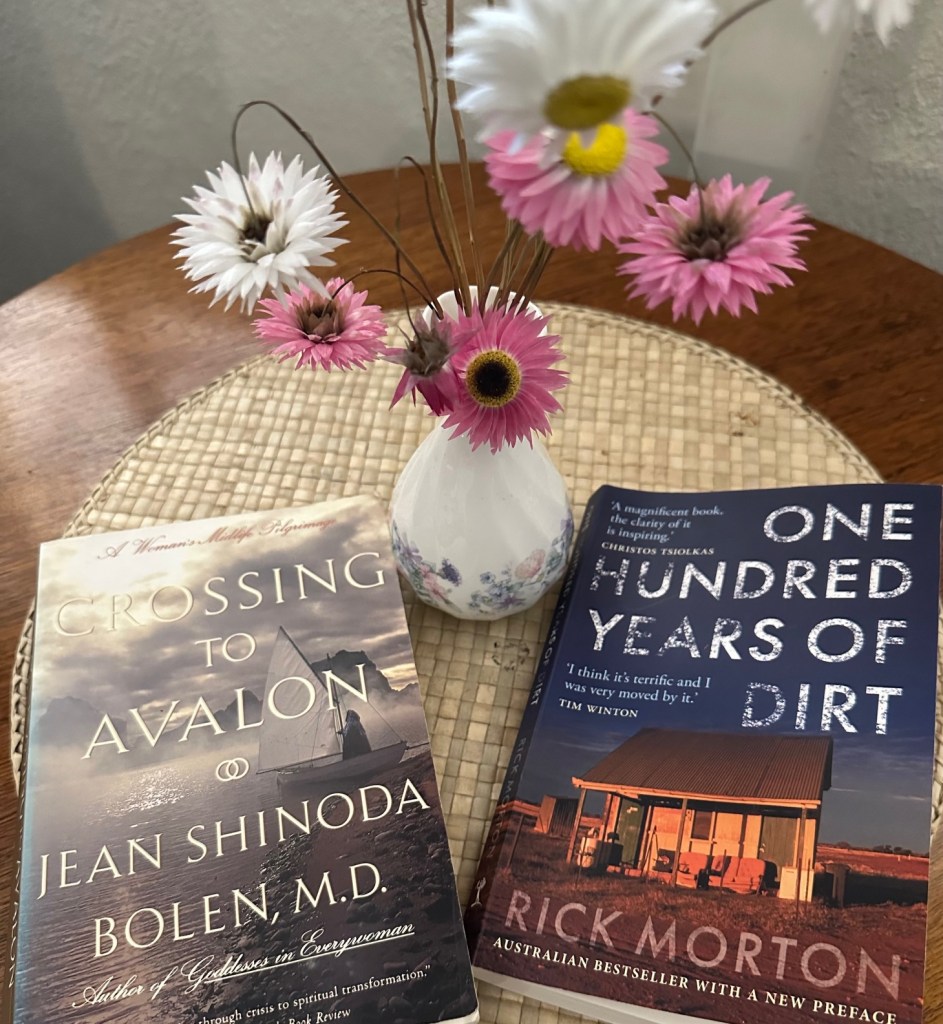
Mel Robbins, in her book ‘The Let Them Theory’ dedicates several well-written, expertly informed chapters on relationships. I recommend them to anyone struggling with a relationship, but be warned, the chapters focus on you – how to influence, and if necessary, make black and white decisions about your future. She continually asserts we can only control what we think, how we respond to our feelings, and what we do. We can’t control other adults, including those we love.

When you have done what you can to influence the behaviour of another adult and nothing changes, the time comes when you must decide if the behaviours of your loved one are ‘deal breakers’ – something you can live with for the rest of your life, or not. Answering the question about whether our partner’s perspective is a deal breaker or not, brushes up against our deeper, often unspoken visions we have for our lives.

An inspiring example of a conversation in which one party checks out whether their partner is on the same page regarding their future is provided. The conversation validates what the person enjoys in the relationship, their own deeper vision, and the worth of time and energy – our life.

I pondered what I would say in an unsent letter to my former partner if I wrote it from these three points. First, if I stated how much I valued his early generous showering of gifts to demonstrate his love. How I was enriched through travel to different parts of the world, of having the financial freedom to pursue business ventures, and of meeting his extended biological family, and adopted families in third world countries. To enjoy exquisite food in fine restaurants, and to invest in philanthropic projects. But also to be honest about my need for deeper companionship, a broader range of mutual friends, and a family life that involved loving children. Finally, to then speak of my ongoing investment of my life energy and time in our relationship only if I knew elements of my deeper vision for my life could be integrated into our shared life. And to accept his ‘no’ if the vision for his life was completely different to mine.

In imagining that unsent letter, I felt myself settle internally. I felt respect and compassion permeate my being – for myself and for him – 20 years after the severance that eventually came. I spoke truth in that imagined letter. Separate individual needs existed alongside shared companionship. Gaps also existed. Writing can help us to make decisions from a mind that sees it all clearly. Mel Robbins’s chapters provided truths and questions that allowed me to explore it all.

Mentally writing that letter made a difference. I may now use a quiet moment to write it more fully. Nearly a year after his death, an unsent letter allows him to ‘rest in peace’ in my heart and my heart benefits.

Learn from the learning of others. Books like the one written by Mel Robbins are a gift. But their benefits are only half reaped if we don’t work with them. ‘Let Them’ write books, then ‘Let Me’ explore how it fits with what sits in me. How does what they say apply to me? Does what sits in your own repertoire of untapped wisdom from experience resonate? Using other people’s words to explore your own untoiled inner realms brings more of you alive. Using other people’s inspiring knowledge, bring more of yourself to the page, and grow.

Let Me

Mel Robbins, in her recent book ‘The Let Them Theory’ offers a simple but powerful mechanism for reregulating discombobulated brains and redirecting our attention so that we more fully access the brain’s power, increasing awareness, self worth and agency.

In a nutshell, when you find your mind occupied by something troubling, simply say “Let Them/It/Her/Him, etc” and turn to ‘Let Me’.

When our minds are occupied by troubled thoughts, an habitual neural circuit is in play.  It is an internalised habitual ‘script’ like the ones parents use to develop habits in their children, eg. ‘clean your teeth’, ‘pick up your clothes’, and ‘wash your hands’.  Those scripts must become embedded (habitual) for behaviour to become a habit.

The process is testament to the amazing unconscious learning mechanisms of the brain. The brain doesn’t distinguish between habits we wish to develop and those we don’t (that’s the role of awareness), and nor does it distinguish between internal behaviours and external ones. For the brain, all activity occurring in its operational centre is ‘live’ data.

‘Let Them’ is a powerful script. It erases all the ‘victim’ type thinking that usually sits under our troubled thinking. It is a circuit breaker (but may require a few repeats), re-regulating a stressed brain. It creates space – which we can then use to explore ‘Let Me’.

I recently used the approach to explore a past experience that has tended to revisit. I felt the power in the words ‘Let Them’ (in this case to walk away) and, picking up pen and journal, embarked upon writing to explore what sat underneath the words ‘Let Me’.

We can’t know what the ‘Me’ part needs to take responsibility for unless we explore it. Writing or talking are the most fruitful portals for this work. Anxiety, depression, and neuroplastic symptoms created from troubled minds are indicators that we are not responding to issues in our life with agency and power. Through early learning experiences, people develop inaccurate beliefs about these human qualities. We innocently learn to think ‘untruths’ about ourselves and get stuck in spirals of angst created via these untruths sitting below consciousness but manifesting nevertheless. ‘Let them’ breaks the circuitry, calming the amygdala and opens up space for us to explore the vast repertoire of wisdom our brains have gathered and stored – also out of sight.

Use your journal to explore the ‘Let Me’ element. What emerges will be different for everyone. What emerged in my exploration revealed deeper truths about my thinking and naïve processes for encircling myself with people who nourish me deeply. It revealed ‘blunted’ thinking I had internalised about myself and how this played out. It revealed an ignorance of the wisdom I had gathered through all my earlier experiences. That wisdom had been filed away, I just hadn’t accessed it.

Experiment with journal writing into the ‘Let Me’ aspect of Mel Robbins’s theory. But don’t lash yourself if the process feels messy. It’s new. Keep trying and if you need guidance or more structure, call to make an appointment.

Story B

When teaching writing, the narrative plot revolves around the ‘want’ of the main character, the obstacles they encounter, and the solutions they attempt. At some point in the story, it becomes evident that what the character thought they wanted, wasn’t really what they wanted and a deeper unconscious want emerges. It is this that is finally resolved. ‘Story A’ is the story of the obvious want. ‘Story B’ is the story of the deeper goal. These two stories play out in real life as well as in books.

My story of recovery from a relationship marred by coercive control included several external wants or goals that over time revealed deeper ‘Story B’s’. Initially, I wanted freedom and space from the constant barrage of criticism and crazymaking. I naively assumed moving out of physical proximity would rid me of the anxiety I lived with, of the need to assert myself and of the need to learn how to navigate situations of threat. How wrong I was. Whilst physical separation provided some relief, the real need or want was of myself. I wanted me. I wanted a version of me that didn’t cringe, that could feel comfortable in her own skin, that could feel like she belonged in the world again.

Eventually, through journal writing, acting on the truth that emerged on those pages, and reflecting on my process, I found what I truly wanted. Me. A version of me I liked. A life I liked. An inner presence I didn’t know I had.

Looking back, I recognise a list of goals, the achievement of which I thought signalled ‘success’ at recovering from a situation I felt ashamed about. I thought I wanted to construct a life that didn’t resemble the one that brought me shame. I thought I wanted to reconstruct the one that resembled my life prior to the coercive control. What I really wanted was to not feel ashamed of myself. I wasn’t clear on the distinction between Story A and Story B.

Prior to the relationship, I had worked in senior management positions, operated successfully as a consultant in the health sector and provided corporate training to large organisations. During the relationship, I shrivelled under words about my stupidity and ignorance. Post the relationship’s departure, I innocently assumed that a well paid, esteemed professional job would restore my sense of worth and dignity. That was my Story A.

For over a decade that is the story I chased. That story was an illusion. The real story is Story B. The one in which I realised that external ‘markers of success’ mean nothing, that my true worth resides within and that no one can take that away from me. Through writing, reading, writing about reading, experiencing, and writing about experiences, I realised I had nothing to feel ashamed about. Being ashamed of me was misplaced. I woke up to something unique and special in me that I can honour and nurture so that it sustains me for the rest of my days – even if I end up a demented resident in aged care.

When we embark on a journey … of securing a solution we think will resolve a need or want, be prepared for the possibility that you have got it wrong. That, like a homing missile, the inner yearning or need seeks something different …. something deeper, something wiser. If you feel shame about any of the experiences you have overcome, nothing external will remedy that. In order not to feel ashamed, we need to find what we are proud of in ourselves. We need to write the heroine into being, to seek and find the gifts she carries within, of its place in the external world, and how to bring it to others.

Domestic violence, sexual abuse, incest, alcoholism are experiences that happened to us. How we navigated them and what we genuinely reclaimed so that we live with greater peace is the real story … our Story B. Recover through uncovering. Write.

Muffled

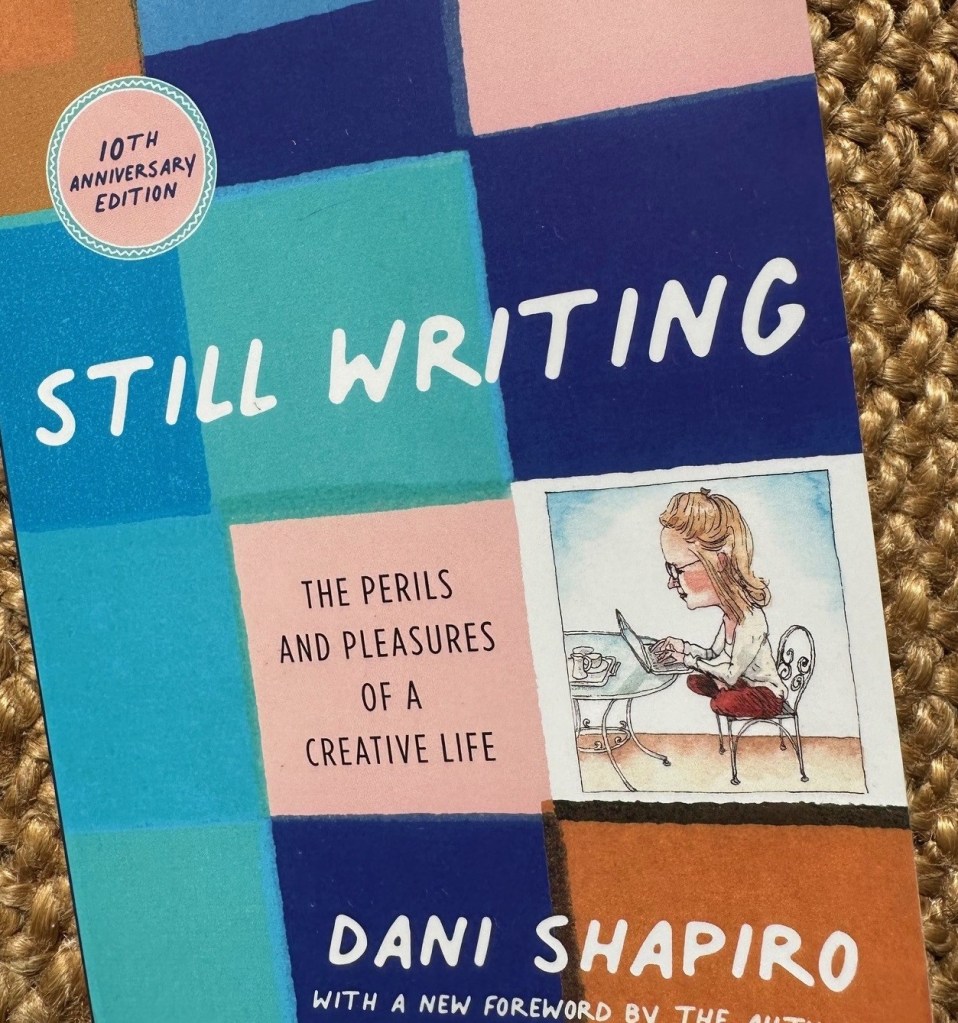
In her book ‘Still Writing – The Perils and Pleasures of a Creative Life’, Dani Shapiro writes about her overuse of the word ‘muffled’ in one of her novels. She realises that in unconsciously repeating the word, she is not close enough to the interior life of her main character.

None of us are close enough to the interior life of the main character in our lives – ourselves. Socialisation, early attachment, temperament, and life experiences all play a significant part in creating psychological obstacles to that realm. We develop habits in keeping ourselves distant from it and we learn ways of communicating and relating that come from thoughts filed away in heads guillotined from what we know in our being.

Earlier last week I was interviewed for a counselling position servicing people with extensive needs. I was asked if I had worked with people who lived with Disassociative Identity Disorder or PTSD. Instead of talking about my lived experience of working with these clients, I spoke from the head, and as I spoke I could feel the energy of genuine conversation depart.

Why did I not talk about my experience with listening? About my experience with hearing each person’s story and validating their hero’s journey with survival? With the difficulties in countering the medical model’s interpretation and the sense of hopelessness it brings? With listening for small ‘windows’ in which to open up different ways of understanding? Of the challenges in creating a safe space and of the stretch I must make if I am to grow enough for them? And all this before embarking on the tools and techniques psychologists are trained in.

Because I forgot to get close to my interior life, the repository of what I know from lived experience. I had forgotten to have a conversation with myself in my journal about what I know about my work with this client group. I had forgotten to harvest my experience; my knowing; my wisdom.

Whether we are writing a book, or being interviewed, or parenting children, or talking with our loved one, none of us escape the potential to fall into the trap of evading the depth and breadth of our own interior life. And when we do, we don’t ‘ring true’. Our words don’t resonate, not with ourselves, nor with others.

Journal writing has been my portal for getting closer to and clearer from my interior life. That job interview reveals I have further to go. How can we talk about what WE consciously know if we don’t turn to the vast amount of unconscious material within and ask? A job interview is not the place to explore what I know. There isn’t the time – to develop rapport or to follow trains of thought until wisdom is revealed. The stakes are too high. And not enough inner exploration has been done to truly ascertain ‘fit’.

Whenever we need to relate to another about something important, it’s important to distill our inner reality about the situation before we embark upon an exchange of feelings, needs, and wants. What is your truth about your relationship with a job? Another person? A responsibility? What needs and wants are tangled up with that ‘other’? Should they be met in that relationship or elsewhere? What might the ‘other’ want from you? What do you want to give?

If we don’t take time to explore our interior lives we can present as ‘muffled’ or at the other extreme ‘rigid’. Familiarising ourselves with our interior realities provides a starting point, one that feels ‘real’, and one from which an exchange, an openness to altering, can occur. Get closer to the interior repository of your lived experience. Write about it, explore how the threads come together and reap the insights that land – before sharing it with another.

The Paintbrush of our Minds – Thought

In learning how to teach young people with learning disorders how to read, I learned the importance of explaining how words work in the closest manner possible to the truth of how the human brain developed a writing system over thousands of years. It all came down to the brain’s attunement to speech sounds. Deviate from that and our writing system becomes confusing and incoherent. The same applies to our understanding of human psychological functioning.

Every theory and therapeutic modality is an attempt to put structure around what is observed. Unfortunately, some of the terms that are used take us away from the simplicity of how our psychological system operates.

All human experience and behaviour arises out of the firing of circuitry formed in the brain. There is no one location for the ‘ego’, or the ‘inner child’, or ‘parts’, or the ‘self’. Each of these constructs is simply what we observe about the types of thinking patterns that have been neurologically ‘wired in’.

Interestingly, we all have the potential to observe these neural pathways in action. However, our ability to do so varies. If that ability is blunted, neural wiring makes it so. Somewhere in our past, we have wired in a belief that paying attention to our internal reality is to be avoided – and the firing of that wiring makes it so.

When people say, ‘I don’t like conflict …’, or ‘I’m not the sort of person who ….’, what they are really saying is that this thinking that has been wired in. A more accurate use of language would be to say, ‘I am the sort of person who has some avoidant neural wiring around conflict’, or, ‘somewhere in life I learned to think ….’. The ‘I’ is doing the observing.

We all behave as if the thinking we do is truth. Most of the time it’s not. It’s just wiring. How different life can be if we hold our thinking lightly.

In recent months I have innocently taken my thinking about the meaning of being usefully employed seriously. Through writing, action, experience, and more reflective writing, a deeper thought has emerged, sculpting an inner peace not dependant on external validation. I am grounded the value of what I offer. I know the stability and energy it brings. I intuit it’s life giving value.

I don’t find the notion of an ‘inner child’ particularly useful. I know I have a raft of infantile and childhood thinking stored in the lump of jelly inside my skull. And I also know that some of it is so automatic and intrusive on my daily functioning that it needs reshaping. Not to erase it, that is impossible, but I can write to explore the internal and external context around it’s birth; read and write in the hope that an insight explodes like the birth of a star; and an even more powerful thought is established in the inner galaxy of my mind.

My brain can produce catastrophising thoughts, thoughts that separate me from reality, doubtful thoughts that destabilise me, thoughts about the danger of people, thoughts about anything. We are all an expression of thoughts and patterns of thoughts that are wired into our brains. And we are also the potential for more. The potential for something new and fresh. Liberating. Writing does that for me. Writing allows me to see my thoughts, to ask questions about their origins, their births, their instructors, and the context in which I picked them up. It also allows me to see their amazing inbuilt survival purpose and to feel compassion and admiration for the resilient heroes we all are.

Writing allows me to be awed by the emergence and source of insights and thoughts that liberate. Our unconscious is the repository of some of our most life limiting thoughts and is the source of thoughts that can craft heaven on earth. Both exist. Both sit side by side. Both are available. Write to know them. Write to capture their presence in your day. Befriend both.

Farewell to Naivety

Many people are waiting for life to settle down. At times, I fall into the same anticipation. But maybe the belief that we experience small ruptures and then life settles down is an illusion? Maybe it just keeps changing and what we haven’t accepted is the need to grow and run with life’s iterations differently. Remaining naive to that trips us up.

Engaging in a relationship with a life long partner is the beginning of a journey. It never ends. Commitment is the first experience. Many, many more follow. Careers, children, extended families, dislocation, relocation, economic circumstances all make unforeseen demands on what started out as a safe space for two people. That space comes and goes. How does a couple go back to what it was when everything has changed?

Having a child is also just the beginning. Parenting is a long learning trajectory. Health issues, neurological individuality, learning difficulties, changes that come as new areas of the brain activate through adolescence and early adulthood. All need navigating and support. Throw in the challenges of modern technology, drugs and alcohol, school dynamics, and family restructuring, parenting demands that we frequently hit the ‘refresh’ button.

And as we age, death and illness appear with increasing frequency. Colleagues and partners die unexpectedly through heart attacks. Cancer eventually makes an appearance. Parents become frail, needing intensive support to organise living arrangements and care. Chronic illnesses emerge interfering with daily activities and ease with activity outside the home. Everything changes with the appearance of these factors in our daily lives. Most notably our internal realities. Once the realisation that life is random and finite has birthed into conscious awareness, nothing shifts it. Our inner stability is shaken. For some, it is too much and life stops.

Once any of these events have entered our personal narratives, life never returns to ‘how it was’. The events catapult us from one reality to another.

How do we cope? Do we numb the discomfort with whatever means we have available? Do we grit our teeth and hope that eventually it will all settle? Or do we acknowledge this is how things are? Change, disruption, the call to be more than what we were yesterday is the one constant we can expect.

For those of us who write, or create in any form, is the knowledge that an internal space of creation is always available. Know it intimately enough and we eventually know that ‘it’ is the only constant. It is the quiet centre of the storms that swirl around us. It is the space out of which human resiliency emerges, the space in which who we are resides, the part of us that knows we can handle whatever comes our way, even if that demands ongoing small deaths of what we think ourselves to be, intertwined with unending small resurrections from within of our infinite essence.

Internal death and resurrection. Our true nature and the antithesis to a perspective that says we need ‘forever’ external stability and perfection. Stability resides within. The small deaths and small resurrections are our innate perfection. Write to reveal them.

Psychophysiologic Signalling

The turnoff to Toodyay appeared before me as I drove home Sunday morning from a very peaceful and nurturing retreat at New Norcia Benedictine Monastery with Virginia Jealous. ‘Ah,’ I remembered. Today was the Toodyay market day so I slowed down and swung left.

Not even 100m after the turnoff, a flicker of anxiety began. I became unsettled and the impulse to turn around was strong. ‘Did I want to go to Toodyay?’ ‘Did I want to spend money I couldn’t afford?’ ‘Would I enjoy it?’ ‘Would I feel better if I went home and got stuck into my washing and ironing?’ ‘Did I really want to drive further away from home rather than closer to it?’ ‘Would I enjoy the drive down the Brand Highway to home, or would I prefer the more scenic route through the Darling Ranges?’ Round and round my thinking went, with my body following suit.

This was familiar. Every time I ventured out spontaneously on something novel for myself, I ended up in a knot.

Experiences in our body, from anxiety to pain, signal something – but what?

We may believe that anxiety and depression arise out of chemical imbalances or genetics. But neuroscience and epigenetics have both provided deeper understanding of the powerful roles of thought and the environment in the manifestation of these symptoms. They are the ‘up stream’ factors that create the experiences and if repeated often enough, can result in chemical imbalances, or genetic activation and shutdown.

We may believe that chronic pain is due to something structural in our bodies. In the majority of cases, this is not true (although all pain sufferers should seek medical assessment to rule out tumours, infection, and fractures). In both acute and chronic pain, the brain interprets a wide range of ‘data’ before activating pain sensations. In acute injury, nociceptive impulses are sent to the brain and interpreted alongside existing ‘data’ from our pain histories, ‘getting ahead’ behaviours, the environment, and earlier experiences. On the basis of all this information, the brain creates the most useful response to ensure survival. With chronic pain, it turns out that the brain doesn’t need physical damage to create the experience. It draws on that interconnected wiring and does it completely independently.

Maybe we misunderstand the mechanisms behind chronic emotional and physical symptoms and conditions? Maybe, instead of seeing them as indicators of ‘damage’ or ‘flaw’ they are actually signals from our healthy mind/body threat system alerting us to something in our learned cognitive architecture that isn’t serving us well and is getting in the way of living life with joy, agency and ease?

My anxiety whenever I venture into something spontaneous and just for me signals something I have learned in the journey of my life. As I drive, there is no ‘ogre’ down the road. My anxiety isn’t some form of higher power telling me an accident awaits me. I haven’t made a commitment elsewhere which I have now forgotten. Nothing sits before me except the opportunity to use my time freely (it’s Sunday for goodness sake!) and to do something enjoyable (even if on my own).

‘Time’, ‘enjoyment’, and ‘solo’, and all emotionally laden terms for me. They are part of my cognitive architecture. Time ‘should’ only be used for work; ‘enjoyment’ is what I ‘should’ bring to others, not myself; and ‘solo’ suggests there is something wrong with me – a ‘good’ woman is ‘partnered’ – and ‘joy’ is therefore only experienced with others.

I have done enough reading and journalling work to have a bit of insight into the origins and manifestations of this architecture. As I slow down my car and wonder whether to continue to Toodyay or to turn around and drive home, I have options. First, I can turn away from the questions and cognitive spin giving rise to anxious feelings, and redirect my focus to the beautiful landscape whilst I drive on. Being present works. I am safe. I can also note the experience for further writing exploration when I eventually sit down with a coffee and my pen.

Our healthy mind/body threat system tells us when something is askew. It’s time we stopped being afraid and learned to appreciate its message. There are now many well developed, neuroscientificallly informed, avenues to change our understanding of ourselves and live life more fully, expressive writing being one of them. If you would like help with the process, please reach out.

Feelings are Fantastic

Nothing about who or what we think we are is set in stone.

Neuroplasticity and epigenetics proves that.

If, as children, we learned to think that we are ‘less than’; or that it’s our job to look after others; that our emotions are a problem; that our needs are a problem; or that caring for ourselves doesn’t seem to be important; then we have learned ‘untruths’.

Thoughts, feelings, and ‘data’ from our senses are all ‘wired in’ with every experience. Outside our conscious awareness, our lovely jellylike brains take it all in, sifts out what is important to keep (usually during our sleep) and uses it to predict what will happen in future experiences.

If any of the ideas presented above have been wired into our circuitry, our brains will sift out information from experiences to the contrary. Over time, these erroneous thoughts (connected to feelings and sensory data) become our default operating system.

Many of us are living from an untrue operating system that resides in our unconscious and alters our mind body threat system – we become overly sensitized to certain stressors including our feelings!

But we can wake up and change it. Sensory feelings in our bodies are the first ‘tool’ for change. Rewiring the lie that our emotional feelings are a problem is the key that unlocks neuroplasticity. And insights are the neural experiences that change our operating system – and who we are.

Notice what you are experiencing in your body as you go about your day. Write about it. Reflect and write about its link to childhood or adolescent experiences. Something will surface from the subconscious. Trust it. Write your truth about how you felt back then and how you feel now. Don’t be afraid. That afraid feeling is just your learned neural circuitry that says feelings are dangerous. Be the adult and assure yourself they are not.

Truth about feelings gives your brain real data to resolve. Trust that it will. Trust that something different will infiltrate your consciousness and shift the sensory feeling in your body. Endless thinking does nothing to change the psychological dynamics of what has been wired in. Speaking and writing truth about our feelings does. Don’t be afraid of noticing what’s really going on inside you. David Schechter M.D. in his book The MindBody Workbook, #1, refers to these moments as ‘psychologically interesting’. Get curious about how psychologically interesting you really are!

‘I’ Isn’t Me

How easily we fall into the trap of believing the words we say about ‘I’.

‘I’ am someone who doesn’t like conflict.

‘I’ am the sort of person who doesn’t do worksheets.

‘I’ have never been one to pay attention to what’s going on with my body.

Etc. etc.

What we are really saying is ‘I observe that my brain has been wired to not like conflict and I have never been taught the skills that would allow me to engage with it.’

‘I observe that my brain has not been wired to engage with worksheets.’

‘I observe that my brain has never been taught to pay attention to my body.

Too much of what we ascribe to ourselves, is, in fact, the result of experiences that have ‘wired in’ certain approaches/behaviours which we, in our ignorance, think are who we are.

This isn’t true.Our brains are plastic. What has been wired in, isn’t who we are. And what hasn’t been wired in is still possible.

The next time you find yourself saying ‘I am …’ either to yourself or to others, pause. Write, ‘I have learned to ….’ Explore where you learned that behaviour and who taught you either through deeds or words. Then explore if you wish to remain restricted to that approach or whether you would like to learn to do things differently. Write to discover how you might do that. Trust the process and see what hits the page.

Thick with Thought

Some days, I come home from work with a head that is ‘thick with thoughts’. Mentally congested, I am unable to digest another piece of information.

It would be easy to reach for a glass of wine to dull the senses. But at my age time is precious. I’d prefer to consciously engage with it – and I appreciate the contribution a good night’s sleep makes to the quality of my day.

I have found that just sitting on my verandah perusing the activity of my bushland garden quietens my mind. I suspect meditation would do the same. But I have found my easiest pathway to peace is through writing. When my mind is ‘thick with thoughts’ I ‘free associate’ write. I put to paper all those ‘flea hopping’ thoughts that are rattling around. Work I want to progress, back pain, IT problems, conversation comments, news items, the weather, money, friends and family. All of it. Written on the page.

And as I hop about, something happens. My mind slows and it turns. It settles on one thing to write about and a thread appears. With that thread, my body calms and life feels manageable again.

Earlier in the week a family member spoke of the ‘third shift’ in their life. In other conversations, we reflected on the simplicity and happiness of people living traditional village life. Later, as I washed my dishes (part of my second shift), the memory of households in times gone by with clear demarcation of resource generation and resource saving responsibilities came to mind. My mind tires with the continual need to move between the responsibilities of work, household upkeep, family, pets, garden, and health. Our minds are certainly processing much more than human beings living on the planet 50 years ago! No wonder we reach points where nothing more can be accommodated.

Our mental and physical health is dependant on a balance between cognitive activity (thinking to keep elements of our lives alive) and rest (letting it all go). Find your own way to build in moments of repose. And if writing appeals to you, tame those mental ‘fleas’ by anchoring them on the page and return once more to a singular slow train of thought innate to the natural flow of life. As you walk in the front door after a long day, allow writing to transition you into a calmer space. The external world doesn’t have to reside in our home.