Farewell to Naivety

Many people are waiting for life to settle down. At times, I fall into the same anticipation. But maybe the belief that we experience small ruptures and then life settles down is an illusion? Maybe it just keeps changing and what we haven’t accepted is the need to grow and run with life’s iterations differently. Remaining naive to that trips us up.

Engaging in a relationship with a life long partner is the beginning of a journey. It never ends. Commitment is the first experience. Many, many more follow. Careers, children, extended families, dislocation, relocation, economic circumstances all make unforeseen demands on what started out as a safe space for two people. That space comes and goes. How does a couple go back to what it was when everything has changed?

Having a child is also just the beginning. Parenting is a long learning trajectory. Health issues, neurological individuality, learning difficulties, changes that come as new areas of the brain activate through adolescence and early adulthood. All need navigating and support. Throw in the challenges of modern technology, drugs and alcohol, school dynamics, and family restructuring, parenting demands that we frequently hit the ‘refresh’ button.

And as we age, death and illness appear with increasing frequency. Colleagues and partners die unexpectedly through heart attacks. Cancer eventually makes an appearance. Parents become frail, needing intensive support to organise living arrangements and care. Chronic illnesses emerge interfering with daily activities and ease with activity outside the home. Everything changes with the appearance of these factors in our daily lives. Most notably our internal realities. Once the realisation that life is random and finite has birthed into conscious awareness, nothing shifts it. Our inner stability is shaken. For some, it is too much and life stops.

Once any of these events have entered our personal narratives, life never returns to ‘how it was’. The events catapult us from one reality to another.

How do we cope? Do we numb the discomfort with whatever means we have available? Do we grit our teeth and hope that eventually it will all settle? Or do we acknowledge this is how things are? Change, disruption, the call to be more than what we were yesterday is the one constant we can expect.

For those of us who write, or create in any form, is the knowledge that an internal space of creation is always available. Know it intimately enough and we eventually know that ‘it’ is the only constant. It is the quiet centre of the storms that swirl around us. It is the space out of which human resiliency emerges, the space in which who we are resides, the part of us that knows we can handle whatever comes our way, even if that demands ongoing small deaths of what we think ourselves to be, intertwined with unending small resurrections from within of our infinite essence.

Internal death and resurrection. Our true nature and the antithesis to a perspective that says we need ‘forever’ external stability and perfection. Stability resides within. The small deaths and small resurrections are our innate perfection. Write to reveal them.
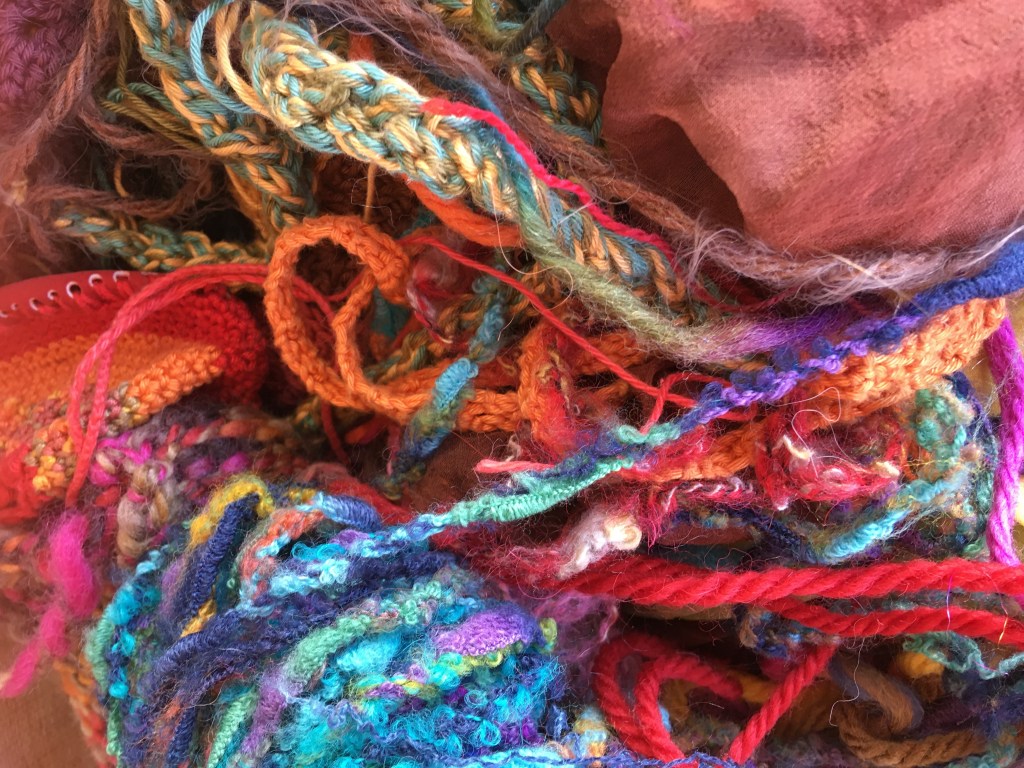
Disentangling

In the world of personal growth, there are ‘many roads to Rome’. My particular pathway to liberation of the self and greater authenticity is journalling. The practice supported me to successfully navigate the dismantling of an emotionally unhealthy relationship and create a wonderful life. It is where I go to process parenting issues or questions about the direction of my work. It is also where I go to record insights as they come, observations about how our inner world works, and moments of intense gratefulness for the gift of being alive.

Over the years I have learned a lot from journalling. I have learned which thoughts to follow, and which ones to allow to float on by – another one always enters. I have learned to trust the feelings of my body and what they are telling me. I have learned to sense whether I am speaking from memory irrelevant to the moment or speaking from deeper wisdom within. I have learned to respect and trust my intelligence. I have learned that tension reflects a person’s ability to hear or not. I have learned to listen for conversations open to engagement and to speak when moved. I have also learned to not speak when learned habits from the past dictate that I should. I have learned to create healthy boundaries and to stay out of other people’s psychological entanglements unless they ask for help. I have learned to trust life instead of fear it.

When I work with clients I take note of the psychological entanglements some people get caught up in when speaking. Conversation patterns generated in families of origin, reflective of class, or created in response to trauma, are revealed. Some people have unconsciously learned to avoid the knowledge and wisdom accumulated through experience. These people have a ‘teflon’ relationship to their inner truth and the way they answer questions reveals this. Whilst others consciously reflect and speak from the accumulated knowledge and wisdom within. When someone speaks ‘with substance’ I can hear and feel the truth of it. When someone responds with a ‘teflon’ response it is as if they begin to move in the direction of what they know but at the last minute slide away. Somewhere they have learned to be afraid of what they know.

‘What activities do you like to do that make you feel good?’ -|-> (Authentic) ‘Snorkelling, I love the feeling of mystery when I am underwater and I never know what fish will be around on the day.’ .|C> (Teflon) ‘I don’t know, I don’t enjoy anything.’ On attempting a different pathway in, a childhood memory comes to mind which then leads to a surprising recall of something they enjoy doing as an adult.

‘What do you want to do about the marriage?’ -|-> (Authentic) ‘I’m done. I can’t do this anymore. It’s time to move forward.’ .|C> (Teflon) ‘He says he wants to change and make the marriage work but then he says its my fault because I never agree to what he wants to do.’ In this response, a speaker’s attention has been diverted to the words of their partner instead of their own.

‘Wow, you must be feeling really sad.’ -|-> (Authentic) ‘Yes, she has been my constant companion for over 20 years. I will miss her a lot.’ .|C> (Teflon) ‘No, I will be fine.’ As tears are swiped away.

Each of these ‘teflon’ responses reflects the activity of thoughts learned in the past entangling and contaminating present moment authenticity, wisdom and experience. In any moment we are either experiencing the truest expression of ourselves or it is contaminated by something we have learned, in the past, to think.

Many women have been conditioned to think of themselves as not the decision makers, as not intelligent and therefore not the person in charge, and as caring for things that are unimportant to society. All of this is not true. Society, families, relationships, and selves, need the voices from the depths of our truth. Journalling is one way to familiarise ourselves with the timbre and feel of that voice and to know when it has become entangled with beliefs and thoughts created in the past and innocently carried forward contaminating the present moment experience.

If you are interested in learning and experiencing how journalling can support you to become aware of the deeper, secure self that exists within everyone so that you can be in the world with greater confidence and faith in yourself, I am running a series of introductory workshops, in person and on line, over the coming months. All workshops will be posted on my facebook page https://www.facebook.com/GeorginaMavor.