Journalling for the ‘Gifts’ in Christmas

What an awful Christmas. I am grateful for its ‘wake up call’.

The impact of people disconnected from the essence of the ‘spirit of giving’; the unexpected death of a close friend; fast failing terminal health in another; and untethered expressions of nastiness, all ‘woke’ in my consciousness over Christmas. Taking time to write and reflect by my local lake revealed blind spots in my thinking, peeled away layers that had reached their ‘use by’ date, and deepened fresh awareness of what was needed to move forward.

A slight breeze rippled the lake whilst walkers and joggers chatted and panted. In the muted sound and light of early morning, I recorded the content of my busy and discombobulated mind.

The spirit of giving whether in the form of a small gift, effort, or time, is important to me. In the lead up to Christmas, my daughter and I took great enjoyment in baking, making and wrapping. Friends and family responded in kind, either in appreciation or with another small gift. But a few significant recipients didn’t. It wasn’t the first time. Free flow writing revealed chasms in values I had not acknowledged, and opened up a pause in which to consider ongoing investment in connection or not. It was a significant decision, and I wrote over several days until my words settled. ‘Shallowness’ that does not sustain and nourish the human spirit is now less in my life and my time is free to invest in relationships more aligned with who I am.

Writing about the unexpected death of a close mate revealed a mirage we all played into, denying us time to say what mattered. We assumed that because doctors were ‘monitoring the situation’, we always had tomorrow to look forward to and that the ‘work of maintaining health’ would take a break over Christmas until services returned from holidays. But Christmas isn’t a pause button. Unanswered phone calls can’t now be answered tomorrow – he’s gone. Writing revealed the need for greater courage and authentic conversation with those not doing so well healthwise, regardless of health professional involvement.

Nasty communication also appeared in the array of human interactions over the festive period. Writing about the personal impact revealed (again) how easily very old learning is activated.  Once upon a time it allowed me to survive a tough environment and to keep living into the future. But I am no longer a child and nor am I in school. We all age and context changes. As that neural wiring calmed, my writing revealed clarity about the people involved now. I didn’t have to engage. Their use of nastiness revealed their psychological functioning. I was not the one to help. Writing about and through that emotional pattern reminded me to be more discerning in who I trust and the depths of care I invest. There are people we can be intimate with, others we socialise with, others who we negotiate in business, and others we walk by.

My pen recorded it all in my journal.

When we are busy navigating life and reaping the efficiency rewards of all the learning we have internalised to automaticity, we can miss valuable information in the present moment. Human learning mechanisms are great for learning to drive a car, but less reliable for more complex matters of living. Slowing down, and prioritising time to journal can reveal understanding in the present moment not recorded in the wiring of our old learning.

Post any intense emotional experience, I invite you to write to the following prompts:

  • Name and describe what you have been through. Be honest. No two people have the same experience. Our thoughts are the ‘ingredients’ of our unique experience. They are the amazing culmination in evolution that allows us to navigate life with efficiency. Identifying and naming the thoughts contributing to experience reveals the limitations of past learning, and nudges questions that take us beyond what has become unconscious (learned to automaticity).
  • Name your expectations (also thoughts). What were your expectations and what did the experience reveal to you about the true nature of life, including the people in it?
  • How do you feel about the match/mismatch between the reality and your expectations?
  • What implications does your deeper, more conscious, understanding of reality have for how you live in the future? What changes would you like to make? Do you have the courage?
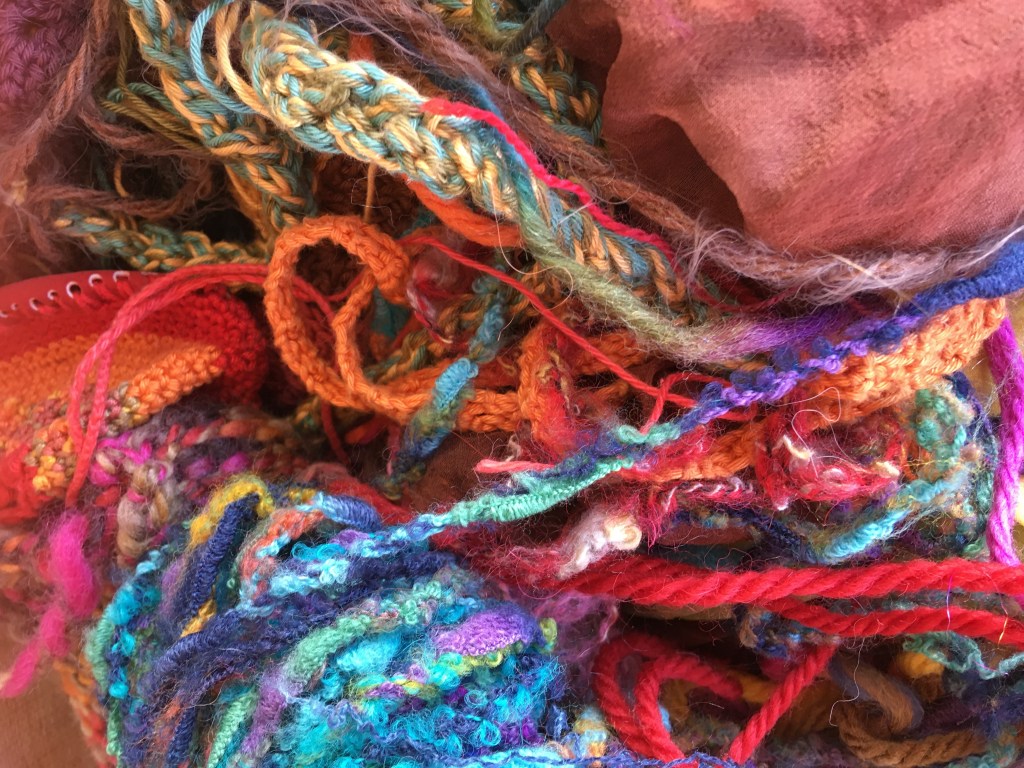
Disentangling

In the world of personal growth, there are ‘many roads to Rome’. My particular pathway to liberation of the self and greater authenticity is journalling. The practice supported me to successfully navigate the dismantling of an emotionally unhealthy relationship and create a wonderful life. It is where I go to process parenting issues or questions about the direction of my work. It is also where I go to record insights as they come, observations about how our inner world works, and moments of intense gratefulness for the gift of being alive.

Over the years I have learned a lot from journalling. I have learned which thoughts to follow, and which ones to allow to float on by – another one always enters. I have learned to trust the feelings of my body and what they are telling me. I have learned to sense whether I am speaking from memory irrelevant to the moment or speaking from deeper wisdom within. I have learned to respect and trust my intelligence. I have learned that tension reflects a person’s ability to hear or not. I have learned to listen for conversations open to engagement and to speak when moved. I have also learned to not speak when learned habits from the past dictate that I should. I have learned to create healthy boundaries and to stay out of other people’s psychological entanglements unless they ask for help. I have learned to trust life instead of fear it.

When I work with clients I take note of the psychological entanglements some people get caught up in when speaking. Conversation patterns generated in families of origin, reflective of class, or created in response to trauma, are revealed. Some people have unconsciously learned to avoid the knowledge and wisdom accumulated through experience. These people have a ‘teflon’ relationship to their inner truth and the way they answer questions reveals this. Whilst others consciously reflect and speak from the accumulated knowledge and wisdom within. When someone speaks ‘with substance’ I can hear and feel the truth of it. When someone responds with a ‘teflon’ response it is as if they begin to move in the direction of what they know but at the last minute slide away. Somewhere they have learned to be afraid of what they know.

‘What activities do you like to do that make you feel good?’ -|-> (Authentic) ‘Snorkelling, I love the feeling of mystery when I am underwater and I never know what fish will be around on the day.’ .|C> (Teflon) ‘I don’t know, I don’t enjoy anything.’ On attempting a different pathway in, a childhood memory comes to mind which then leads to a surprising recall of something they enjoy doing as an adult.

‘What do you want to do about the marriage?’ -|-> (Authentic) ‘I’m done. I can’t do this anymore. It’s time to move forward.’ .|C> (Teflon) ‘He says he wants to change and make the marriage work but then he says its my fault because I never agree to what he wants to do.’ In this response, a speaker’s attention has been diverted to the words of their partner instead of their own.

‘Wow, you must be feeling really sad.’ -|-> (Authentic) ‘Yes, she has been my constant companion for over 20 years. I will miss her a lot.’ .|C> (Teflon) ‘No, I will be fine.’ As tears are swiped away.

Each of these ‘teflon’ responses reflects the activity of thoughts learned in the past entangling and contaminating present moment authenticity, wisdom and experience. In any moment we are either experiencing the truest expression of ourselves or it is contaminated by something we have learned, in the past, to think.

Many women have been conditioned to think of themselves as not the decision makers, as not intelligent and therefore not the person in charge, and as caring for things that are unimportant to society. All of this is not true. Society, families, relationships, and selves, need the voices from the depths of our truth. Journalling is one way to familiarise ourselves with the timbre and feel of that voice and to know when it has become entangled with beliefs and thoughts created in the past and innocently carried forward contaminating the present moment experience.

If you are interested in learning and experiencing how journalling can support you to become aware of the deeper, secure self that exists within everyone so that you can be in the world with greater confidence and faith in yourself, I am running a series of introductory workshops, in person and on line, over the coming months. All workshops will be posted on my facebook page https://www.facebook.com/GeorginaMavor.