“I told him I knew he was frustrated because he didn’t win, but throwing his toys around will only break them and that would make him more unhappy. Quietening him down, I told him to take a few deep breaths so that we could get back into the game.” Words of wisdom from a young mother who has suffered anxiety most of her life, bringing sanity to the behaviour of her young Autistic son.
“Stop. I’m not helping you with your job application anymore if you continue to vent your frustration at me. I’m only trying to help but you do this every time you have to read and writing something. I too have things to do and don’t deserve to have someone angry with me when I am just making myself available to help. Come and get me when you feel you can stay calm. It might take time, but we can get it done.” A mother helping her teenage daughter who struggles with literacy.
Frustrated with the exhaustion of breastfeeding my only baby at 44 years of age, I finally accepted the reality that I was finished, that I just didn’t have the energy or support resources to maintain what the textbooks told me was good for my child. I had begun to turn to a glass of wine each night to keep me upright. That didn’t feel right. It was time to accept the physical reality of my situation, support myself instead of overloading me, and move on. No more breastfeeding, no more needing to prop myself up. Solid food only and move into the next phase. She turned out fine and I felt human again.
Reality is sane. Physical, emotional and cognitive limitations are sane. Live within them and we navigate life with greater ease. It’s our thinking disconnected from common sense that takes us into insanity.
Children need help (when their frustration with reality takes hold) to see that their frustrated behaviour will hurt. Destroying their toys or throwing themselves about doesn’t make their satisfaction with themselves or others better. Taking a few breaths and moving forward helps. Leading our children through the experience of responding with common sense to reality supports the integrity of their inbuilt psychological health system.
Yelling and abusing the people who love and support us affect their level of comfort in being around us. In choosing abusive and disrespectful behaviour because of frustration, we impair the social connections that enable us to survive and flourish. An adolescent has the ability to know that their behaviour may hurt the love they value, and they have the ability to choose whether to engage in it or not. We can help them pause and choose, if we use language that separates their frustrated behaviour from who they are. “I really want to help you, but that behaviour is getting in the way. I want to spend time with you, but not if that behaviour erupts. I will assume that you know how else to respond but if you want to talk it through, just let me know.”
Adults have even greater cognitive capacity to bring better quality thinking grounded in reality to a situation. Instead of being caught up in some picture of what ‘should’ be happening, acceptance of what’s working for us or not is a pretty reliable gauge by which to decide whether to continue or to shift. If something isn’t working, step back, and choose what would work.
Help young children experience ways of soothing their frustration that don’t hurt. Ignite awareness of free will in adolescents and young people by using language that separates behaviour from them as people and affirms the ability to choose. As adults, get out of our heads and listen to the sanity and common sense in the reality around us. We all possess the capacities of awareness and free will. We can all choose something different even when caught up in strong feelings. It’s common sense. Everyone has the capacity to notice, to know what isn’t right for us, and to exercise free will. Those capacities are inbuilt into us and already operating. Begin by noticing when we are caught up in something. If it doesn’t make sense, stop. A saner response awaits.
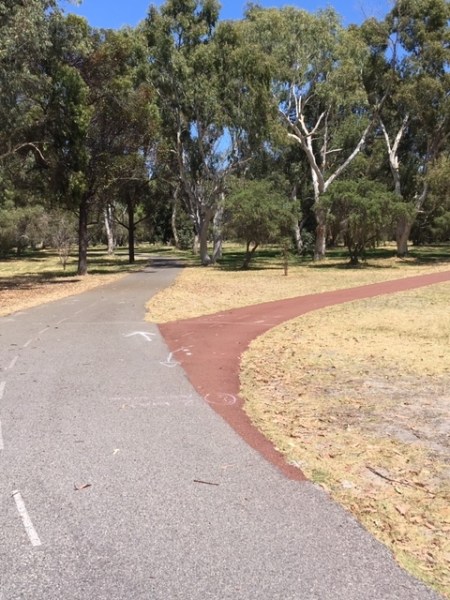 There is one point at which the path diverges, the path to the right taking a more meandering journey closer to the lake’s edge, whilst the one straight ahead melds through a grove of beautiful ghost gums. I always take the path to the right because I think that path is the longer route. Whilst my daughter believes the one straight ahead is the longest.
 When it comes to young children, I’m not sure we can ever really ascertain the ‘trigger’ for the shift in their thinking that creates their insecurity, or really whether it makes any difference. What we can do however is to quieten down in our own minds, do whatever we can to reestablish a secure feeling and listen to what surfaces within ourselves that feels like the right thing to do. Maybe holding them in our hearts, trusting what comes to us in our quieter moments and following through is all that is needed. Maybe the solution to all monsters, imagined or real, is love and the wisdom that comes from it.
 Georgina Mavor