Warning Bells

There are many sad hearts in my local area this week.

Mid week, a Year 12 classmate of my daughter was stabbed. Hours later she died. Neighbours reported hearing an argument. In a heated moment, a strong impulse was followed and a life was cut short whilst others were altered forever. The sadness in our community is palpable.

In a classroom, a gentle hearted boy gets caught up in the moment and follows an impulse. He does something stupid and is suspended. The act was not worthy of suspension and neither was the boy. He can explain what happened, he can explain how conditions in that room are difficult for him to navigate, and he can articulate what he needs in his environment to learn. But the adults around him got caught up in their own impulses and no one listened. In that brief moment, another life trajectory was altered.

A mother reacts badly to her children being children. Overextended and exhausted she flies off the handle with rage at the smallest things. She moves her children through their day and when alone she sits crying in the car at the mother she has become. She is frightened at how powerful is the impulse to lash out, she is frightened at her inability to stop it, and she is frightened of what she may do. She knows where that impulse could lead.

These scenarios are but a small slice of the instances this week in which children, adolescents and adults in my small part of the world followed a brief, strong impulse, resulting in sad, despairing, and frightening outcomes. We need to understand that strong impulses ….. strong emotions, are not reliable truth. They are warning bells, not invitations. They are signposts that we are about to step into a train of thought that lacks wisdom. They don’t end well.

Photo courtesy of Amel Majanovic @just_amelo Unsplash.com

One Problem

Last week, as I sat reading client referrals and whilst reflecting on the problems in people’s lives (including my own), this thought came to me – “What if the only problem we all have is the mistaken belief that we aren’t spiritual beings? What if the installation of that belief is our one and only problem?” This struck me as true.

At that time, I had fallen into a slump. In a moment of pondering that slump, wondering how to use all the knowledge and skills I have at my disposal to get out of it, another thought came to me – “What if there is nothing wrong with you?” My slump disappeared.

How would living be different if we really understood we are spiritual (thinking) beings having a human experience within time, matter and space? What would be different?

Maybe we would understand our depressions, anxieties and tough times aren’t problems to be fixed. Maybe we would know they are experiences from Mind to wake us up to our deeper nature and what sits within it.

Maybe we would know that in our errant thinking we are trying to understand from misunderstanding; interpret from misinterpretation; and that the more we do this, the further away from solutions and peace we stray.

Maybe we would enter our tough times knowing we will come through them with deeper understanding of ourselves and of life. Maybe we would know there is nothing to be afraid of – just life to be lived and deeper thoughts to hear.

Maybe we would turn to the quiet inner voice of our psyche for guidance in navigating life, maybe we would know to be patient for its appearance, maybe we would know we are not the ‘thinker upper’ when thoughts from deep within emerge. Maybe we would see how these thoughts sort the chaff from the wheat, cut through the hubris, and feel suspended in time rather than reactive to it. Maybe we would come to know their slower pace and to trust their flow. Maybe we would ‘stress’ less and ‘accept’ more.

Maybe we would observe the behaviour of others differently … and judge less.

Maybe we would understand that all of life, everything that is going on now, is designed to rectify this misunderstanding.

Maybe we would experience our perfection.

Image from Mohamed Nohassi Unsplash.com

‘Snakes and Ladders’ Thinking

I have this children’s game sitting on my coffee table in the office. I use it to explain the role of thinking as we all play the game of life. Some of our thoughts are ‘snakes’ whilst others are ‘ladders’.

‘Ladder’ thoughts move us forward. We can know them by their feeling. They feel alive, right and positive.

‘Snake’ thoughts eventually take us backwards. They feel dead, revved up, chaotic, rushed, muddy.

‘Ladder’ thoughts emerge from a clear and calm mind.

‘Snake’ thoughts come out of a chaotic, revved up or depressed mind.

Solution ‘ladder’ thoughts are found in a clear mind – our default setting.

Solutions are never ever found in ‘snake’ thoughts.

A clear mind yields thoughts of love, compassion, wisdom, insight, creativity, innovation.

A tumultuous mind yields the opposite.

Both types of thoughts flow through our minds. With the gift of ‘free will’ we have the power to choose which ones to invest in and follow and which ones to drop and leave behind.

‘Ladder’ thoughts emerge from our true self. When caught up in ‘snake’ thoughts turn your mind to your true nature. Know that it is there and slowly you will return ‘home’.

When we have a cold, has our innate physical health left us? No. It is working to kill the bacteria. Our innate physical health system springs into action and sends the chemicals, white blood cells, etc. our body needs to overcome the illness. We experience the symptoms of our innate physical health working and if we ‘tune in’, we rest. In resting, we work with our innate physical health system. If we don’t, we work against it.

When we experience ‘snake’ thoughts has our innate psychological health left us? No. The feelings that accompany ‘snake’ thoughts call us to slow down so that our innate psychological health system can right us. Just as our innate physical health system is available to respond to threats, so too is our innate psychological health system. The ‘outputs’ of our psychological health system are thoughts – thoughts with a feeling of truth in the moment.

Noticing is the key. Notice our cold symptoms as soon as they begin and we can rest quicker, reducing the duration of our cold. Ignore them, push ourselves and we increase the possibility of hospitalisation. The same is true of our psychological symptoms. Notice them early, slow down, turn to innate health, listen for guidance accompanied by a feeling and follow.

We have both an innate physical health system and an innate psychological health system. We are just more conscious and therefore knowledgeable of one. Are you ready to become conscious of the other?

I don’t know …. Part 2

Accepting ‘I don’t know’ in response to a mind filled with questions and problems was just the first step in hearing solutions to the issues I faced with my final client in my previous post. Many traditional psychotherapies now include acceptance as one of the steps in living a more psychologically flexible life. Acceptance entails two components. The first is acceptance of life as it is. The second is acceptance of what our mind understands (or not) about it. If my life requires that I work full time in order meet my financial commitments, feed all members of the family, keep us safe and secure in our home, etc. then accepting enables me to do what is needed. Don’t accept them and I occupy a fantasy world from which I am easily frustrated when the realities of life intrude. When we accept physical reality, our natural intelligence provides the ideas and thoughts needed. Get caught up in our heads, however, and the solutions to physical reality are blocked. They are still there, but our attention is elsewhere.

Now, I know that I can work, and that I can work at whatever if need be. So when I am faced with finding full time work, my mind doesn’t flip into a conniption about the possibility or impossibility of that. Instead, it automatically opens up to ideas. But what about when I come across problems in which I am not so well versed? Ones like how to respond to client problems I am unfamiliar with, or how to respond to a family member in domestic violence, or how to respond to a life threatening health condition? Problems in which I have no prior knowledge or are seemingly impossible to solve?

A busy mind is just as unhelpful in these circumstances as it is to more easily solved individual issues. It clouds access to whatever we need in the moment to move forward, whether that be into action or a shift into deeper understanding. Just as consciously acknowledging the physical requirements of life can open up the mind, so too can acceptance of ‘I don’t know’. Acceptance of ‘I don’t know’ brings the busyness of our minds to a halt and opens it up to fresh ideas.

But consider our learning around ‘I don’t know’? How many of us have been yelled at, hit, shamed, made to stand in the corner, sent to our rooms, made to stand outside a classroom, etc. because we didn’t know? In my mind, our experiences with ‘I don’t know’ is partially behind most people’s psychological habit of venturing into excessive thinking when confronted with a problem. We have learned that a statement of the truth ‘I don’t know’ is unsafe and so we psychologically go looking, usually for a solution that we think will appease the person who has asked the question.

When I stray into a busy mind, I am looking for understanding that solves everything. I do it because I have learned that when I either spoke my truth or I responded with ‘I don’t know’ someone else was very unhappy. As a child, if being truthful didn’t appease others, then I only had one other psychological place to go – out there. The experience of ‘I don’t know’ morphed into a mental habit of turn away from my own wisdom/truth and seek outside. But looking ‘out there’ for understanding and solutions accelerates thinking and takes us away from the clarity we seek. Clarity is found in a slow mind. Mental habits learned from our childhood experiences with ‘I don’t know’ hinder the clarity we seek.

Notice when your mind is busily searching for understanding everywhere but within your own wisdom/truth. Turn around, speak your truth and accept ‘I don’t know’. Go about your life and be grateful for the insights that will come if needed. Practise acceptance of ‘I don’t know’. See what happens when you reclaim the truth that ‘I don’t know’ is healthier and wiser than trying to pretend we know it all, or that we know nothing and other people know it all. Experiment with voicing ‘I don’t know’ without giving reasons. If we don’t know, we don’t know. Experiment with living life from not knowing. Reclaim the power of speaking our truth of ‘I don’t know’ when that is the case. Experience the peace, calm and insights that often follow.

Photo: Matt Walsh, Unsplash.

Ticker Tape Thinking

IMG_0681 (002)Decades ago, when I was first exposed to the inside out understanding of how we create our experiences, my very first ‘different’ way of thinking about things was to see my thinking as ticker tape crossing my mind. I was doing the dishes at my kitchen sink and could see my thinking moving across my mind as ticket tape. It was the first time I could see my thinking  separated from ‘me’.
Last week I came across a tweet from a person feeling bored with the ongoing recording in their head about themselves as ‘marmite’ and how it had become a habit that was now labelled a mental health issue. The use of the word ‘bored’ reminded me of times when I have felt exhausted and down and retreated to my bedroom to hide, only to have something later shift in my mind, a realization that I was bored with feeling down and to leap out of bed with a fresh, vital energy with which I moved into something different. This has happened several times and I am always left with the question, “How can this be? I was physically exhausted and yet here I am with boundless energy!” The experience points to a deeper truth about the nature of our feelings – they are created from the state of our minds, i.e. the quality of thought moving through them. I love the waking up to being ‘bored’, sooner or later our thinking always, always changes.

As I reflected on that tweet, the ticker tape image came to mind again, only this time it was paper tape that changed colour according to the thoughts we entertain. Imagine the flow of thought through you mind as a pale pink tape. When your mind is in that state, you too, flow lovingly in peace. But when our thinking changes, we experience the result. Start to think angry thoughts (see the red on the tape?), we feel that. Start to think self defeating thoughts (see the dark blue on the tape?), we feel that. The driver of our feelings and moods is the ticker tape of our minds, not our external events. This is where we need to turn our attention when we are not feeling so good.

We think that our changes in mood are created by the events around us. But this is simply the illusion we live in. Two people can view exactly the same circumstance in physical reality and have different experiences. What accounts for the difference? Our differences in perception and changes in mood are created by the quality of thought flowing through our minds. In any moment, we are either thinking from the ‘flow’ or thinking from how we have learned to think – our conditioning. Fresh thoughts and bespoke solutions never surface when the ticker tape of our minds is contaminated with the old habitual thinking we have imposed on it. Fresh thoughts and bespoke solutions can only surface when that ticker tape is at rest and uncontaminated by our personality or conditioning.

When you are feeling discombobulated, instead of focusing on the external events, look to the ticker tape first. See what you are creating with your thoughts, thoughts that like the Tweeter with the ‘marmite’ problem, you too have learned to think. We are all conditioned to think in certain ways, but when we repeatedly live life from our conditioned ways of thinking, they have the potential to become personality traits, habits, addictions, diagnoses and disorders.  Try and see your ticker tape of thinking. See the relationship between your ticker tape of thought and your experience and everything changes. And even when life gets messy, your best chance of elegant navigation is through the use of uncontaminated ticker tape, the only state of mind capable of tapping into limitless possibility. So rest, don’t act, and wait.

Journal Writing

In my experience, journal writing facilitates wisdom inspired personal change if:

(a) guidance is gently provided on how to write your words freely, without censorship, and how to ‘divine’ for wisdom that sits beyond;

(b) you have an opportunity to safely speak and hear your words that have unfolded from within; and,

(c) you have a structured opportunity to hear other people’s writing and heed words and phrases that resonate with you.

Powerful journal writing groups provide a ‘held’ space in which we hear something deeper in our own words and/or in the words of others.

In a nourishing journal writing group there is the writing, and listening. Listening to the words of ourselves and others, as against the words we have going on in our heads about others and ourselves, is the ‘soil preparation’ for a rich yield. When listening well, we drop the walls of thought about ourselves and others, about our stories, and we are left with openness and possibility. Here is where we find the seeds of something new. Tend them and life changes.

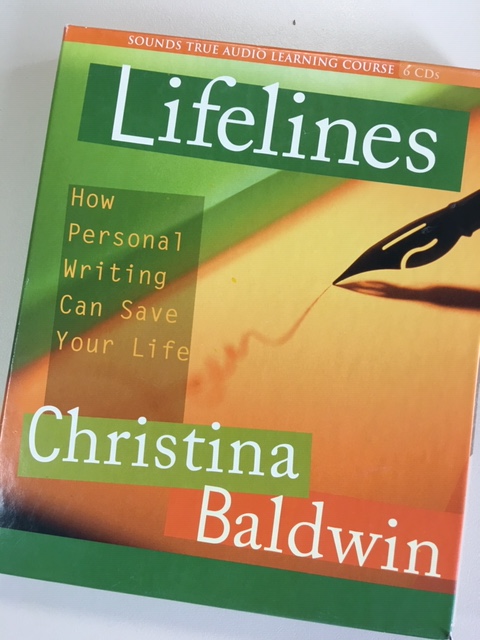
LifelinesBeginning Monday 8 April 2019 I will run a 12 week journal writing group, using immersive journal writing prompts from the CD learning course ‘Lifelines: How Personal Writing Can Save Your life’ by Christina Baldwin. Each session will be conducted from 10 am to 12 noon. Cost per session: $25. Location: Bibra Lake. For enquiries and registration, please contact myself, Georgina Mavor, at 0417 949 179 or georginamavor@hotmail.com
 

Love

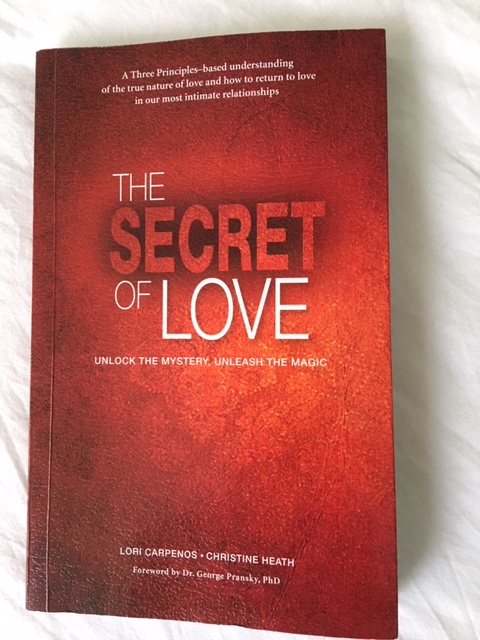
LoveDuring the week, I read ‘The Secret of Love’ by Lori Carpenos and Christine Heath. It weaves wisdom, stories of love and behaviours that can interfere with it.
A few very poignant understandings stood out.

There is only one ‘truth’ and that is that you are the thinker of your life. Every thought is like a dot appearing out of nothing. Sometimes they are created out of our natural state and sometimes they are created from our memory (learned). All of them activate neurological pathways and are experienced in the body and mind. Our perfect makeup brings thoughts alive. The fact that we are the thinker is the only truth, even though the content of our thinking can appear and feel true.

We are always (and only) in a relationship with our own thinking. Our thoughts are the medium through which we experience the external world. Our thoughts create ‘molecules of emotion’ (Dr Candace Pert) which we physically experience. Create negative thoughts and we will experience those, choose positive ones and we will experience those. Nothing outside us creates our personal feelings, although there are many, many low feeling behaviours and events now occurring in the world.

Everyone is thinking different thoughts, so everyone is having a different experience of circumstances, even the same ones. You cannot eradicate differences in any relationship.

When in relationship with another it is your thinking about differences that makes the difference in the quality of your relationship. All differences can be seen for what they are – innocent expressions of the thinking we are entertaining. Decide what differences you can live with and ones that you can’t. It is possible to love another and decide not to live or be with them.

When looking for an experience of love, whether on your own or with another, you are looking for a beautiful feeling, in yourself, and/or someone who wants to share that – above everything else. You are looking for someone who is willing to explore what’s possible when we drop negative thinking and interact only when reconnected with thought from our natural state.

Love is the natural state of Thought. Drop the dots of negative thinking and experience the warm feeling, the spontaneous eruptions of gratefulness and the wisdom that resides in the natural state of Love. Love is and can be experienced regardless of our external circumstances.

Falling in love, or falling out of it, are both an internal process of falling in the stream of thought called Love or entertaining negative thoughts that make their cheeky appearance and falling out of Love. Imagine sitting on a jetty, basking in the warm sunlight, luxuriating in the feeling on your skin and soul. A strong thought emerges to jump in to the murky water below and because you know nothing different, you follow that thought. Your mind panics, thoughts run wild and you cannot navigate the dark depths. You see a ladder beside the jetty and climb out. You resume your place on the jetty and begin to warm up again. In hindsight, you wonder why you followed that thought in the first place.

Possibility

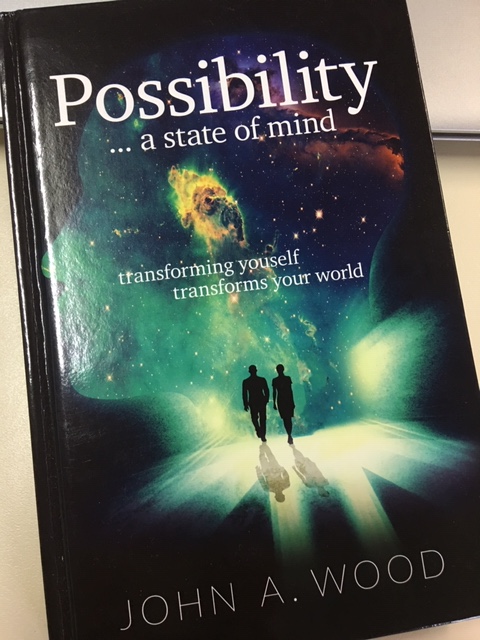
PossibilityWay back in 1993, John A. Wood brought the Three Principles understanding to Perth. Whilst his Centre closed its doors, John continued with his life journey and recently released his book, ‘Possibility … a state of mind’. It is an autobiography, one that draws out his more recent insights.

Whilst I found it overly ‘wordy’ (but which was deliberate for those for whom his words maybe foreign), I enjoyed my reading of it, and found his thoughts ‘fresh’. John refers to the energy that flows through us – Life, or Thought. Human beings turn that energy into thinking, moment by moment by moment. For most of us, and for most of the time, we use memory to turn Thought into thinking. As thinking is the mediator of all experience, thinking crafted from memory creates the same quality of experience, over and over again. The alternative, the ‘road less travelled’, is to let go of memory, and instead be open to Possibility.

Unlike the Three Principles understanding, John distinguishes only between thinking created from memory …. or Possibility. Letting go of thinking from memory, includes letting go of gender, our past, ethnic origin, religion, work, achievements, etc. etc. etc. They are all irrelevant.

The fact that Thought can be sculpted using memory or open to Possibility explains why viewpoints and behaviours often narrow as we age.

In the 3 Principles understanding, insights are recognised as the mechanism for personal change, whether that be in the moment or over time. Seeing Thought as either manifested from memory or Possibility expands our understanding of insight and allows us to ‘see’ our thinking more upstream.

Perhaps his greatest clarity is around innocence and compassion. When we can ‘see’ both ourselves and others as either operating from memory or Possibility, this immediately changes our stance both to ourselves and others. If we are unaware of Possibility, then we are stuck with what we have always used – memory.

John has posed Possibility workshops as a way forward. Similar attempts to bridge the divides in humanity that emerged in the 80’s from people like Scott Peck and Robert Theobald held huge promise but unfortunately ran out of steam. Maybe John’s offering provides a missing piece of the puzzle.

He, I and others are scheduled to meet later this week. I look forward to …. Possibility.