We are all the directors of our experience of the story of our life. Our story has a beginning and an end. It has unique content. In between, we get to choose where we focus the camera of our awareness and the point of view of our thinking.
The craft of a great director of our human story is in understanding and deftly working with our thinking and feelings.
In all the myriad of details we can focus on in each moment, we unconsciously choose what we pay attention to — until we become aware of what we are doing. Alongside our attending we are interpreting, using the words and images from thought to make meaning, even if that meaning in the moment is to operate on automatic.
We experience where our thoughts meander.
Often we change direction, instantaneously experiencing the miracle of the mind body connection. We change our mind, our attention is caught by something, we have an insight, we hear the logic in another person’s words, we become immersed in a flow experience and … what we are experiencing in our bodies changes.
We experience where our thought moves.
Our thoughts, whether in the form of words or images are not ‘facts’. They are akin to clay, something we can shapeshift. We may not be able to direct what comes in to our minds (and maybe we can), but we are able to choose which forms to engage with and which ones to leave behind. We can direct the experience of our life story, regardless of its content.
As a therapist, I will at times set behavioural experiments for clients to discover for themselves what I point to in our sessions. I also utilise them when I too get caught up in an uncomfortable perceptual lens that takes me nowhere. Try them for yourself. See what you learn about your capacities as the director of your experience, about the creative nature of thought, about your own habits of mind and about the so-called truth of much of what we think, particularly about ourselves!
1. The first step is to notice. Notice the feelings in your body and check in with what is going on in your head. If this isn’t possible in the moment, hindsight is a remarkable human tool. Look back at the experience you have just been through. Look at the thinking driving it. If you acted on it, what was the result? If you didn’t act on it, what was the result? Much wisdom is gained in life through hindsight, when we see how behaviours that erupt from a troubled mind usually result in more trouble. Noticing is a powerful inbuilt mental health faculty.
2. When caught up in overwhelm, with a list of things that must be done running through your head, go in the opposite direction. Stop, ask yourself what you need to do to slow down your mind and your actions — and do it. What did you learn? How important was all that stuff you had on your list? Did the world open up and swallow you when you stopped all that pushing ahead?
3. When you are caught up in hurt and pain, wanting to lash out at others, stop and look after yourself instead. Be kind to yourself. Write in a journal, have a bath, dress in your favourite clothes, soften, be gentle to you. The other person may not be kind to you, but you can assuage your hurt by being gentle with yourself. And once you are feeling better, you can then decide what to do with unkind people in your life.
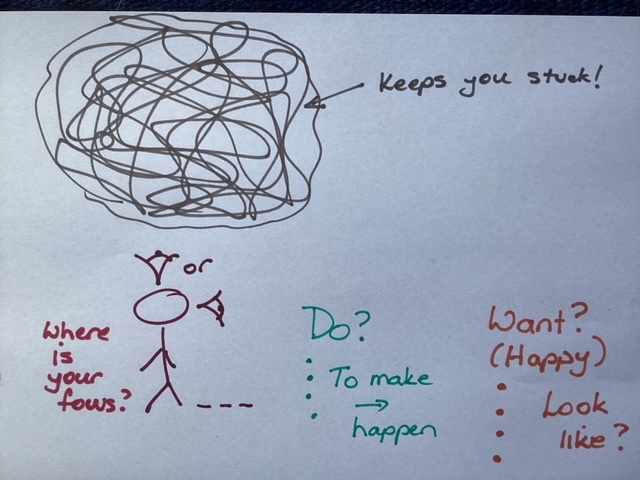
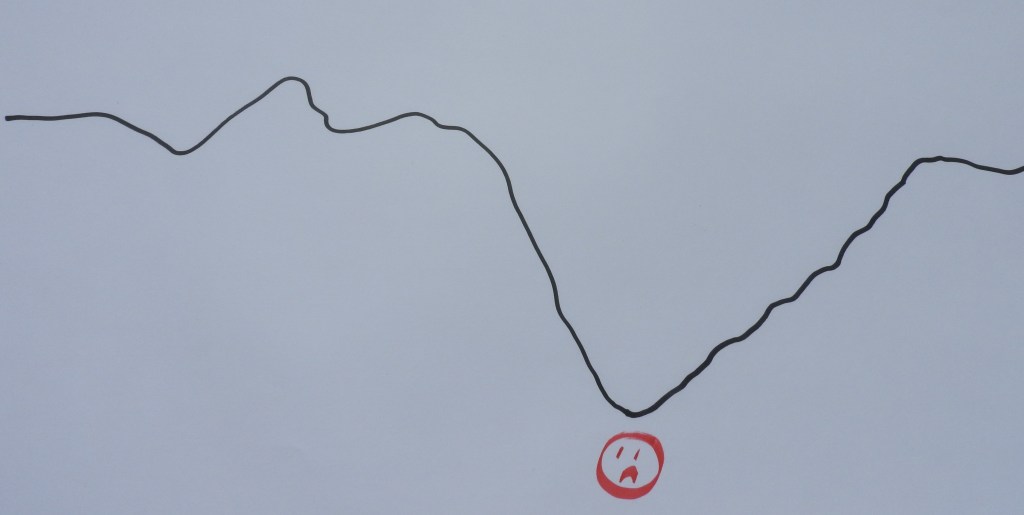
4. When your mind drops into a low mood, when everything about you appears gloomy and you have no energy — do something. Do something that fully engages you. Run, ride a bike, play chess, garden, walk in the sun. Those gloomy states of mind can be dangerous. They aren’t a life sentence, they are a thought created psychological state playing out in your body. Experiment with relating to it as a ‘state’ rather than a ‘trait’. Know that the true ‘trait’ is the power of awareness. If we can see that we are gloomy then what is the true self? The gloomy abyss or the point of awareness that sits above it all. Instead of buying into the gloom buy into the awareness. Act from there and see what happens. Did the gloom disappear? Did it shrink? What did you notice about your attention and thinking as you wavered between the activity you engaged in and the gloom in your mind. What we attend to expands.
Always notice, then when in a calmer state of mind, listen for what needs to be done, if anything. Not only does a director have a keen eye, she/he also taps a creative faculty when problems are encountered. How else would brilliant stories in films and books be created? We need the content of the story — and we need the interpretation. It is the latter that captures us, inspires us and reflects the hope that is inbuilt into life. Hope is part of its nature. Hope is part of our nature. It is part of the effervescent vitality of life. But it is hidden if we stay in ‘stuck’ states of mind. Developing our director skills in choosing which thoughts to privilege and which ones to walk away from is a key skill to determining whether our story is one of fulfilment or one of suffering. Which life story will you direct?
PS. The information provided in this post is for general information only. Appointments are available for anyone in Australia seeking more personalized support either face to face or via Telehealth. Please call 08 9330 3922.
Photo Courtesy of Denise Jans, Unsplash.com







 Georgina Mavor