
No life avoids the need to change. Resistance to growing up, to deepening in relationship, to heeding the body’s needs, to leaving an abusive situation, to changing unhealthy habits, to confronting mortality, to moving on … leads to psychological and physical distress. Embrace the change needed and life unfolds afresh.
Last week, at 18, my only child gained her driver’s licence. With two fulfilling part time jobs and an expanding network of friends, her licence affords her increased freedom with which to explore and craft her adulthood. Life naturally invites her in that direction and she has accepted.
Her driver’s licence brings my intense parenting to an end. After years of supporting school and sporting commitments, a year of driving her to and from her workplaces (5 times a week), and more recently, a year of teaching her through 50 hours of driving, I now faced vast swathes of time, underdeveloped social networks and faded memories of pastimes nearly forgotten.
Some months ago, I could see this transition looming on the horizon. Either I could sit at home lamenting the empty nest, or I could choose to move forward with me at the centre of my attention. This I wasn’t familiar with. My energy levels pulled me to the sofa, a future I didn’t want. If I was going to experience a better quality of life than years in front of the TV, I needed to craft it from within, listening for what fit and to slowly take the journey.
Whilst my daughter was growing up, I enjoyed camping and music festivals. With each new adventure, I learned something about myself. I learned I needed comfort when camping – managing insects and heat well, being close to water to swim in, lying on a comfortable mattress, all make a difference. I also learned I needed to reduce my responsibilities when camping – leave the dogs (and my parents) home. I learned I needed to reduce the amount of work required of me – ‘air pole’ tents are great, camp kitchens suffice and no one needs that amount of ‘stuff’. I also learned I don’t like large music festivals, and smaller ones that are safe for children allow single parents to enjoy a rare moment to relax from vigilance.
These two activities, together with a commitment to regularly connect with neglected friends and a resurrection of journalling workshop emerged as the entrypoint for crafting my ‘later life’ years. I now check in with friends at least once a fortnight and have booked two night camping trips once a month.
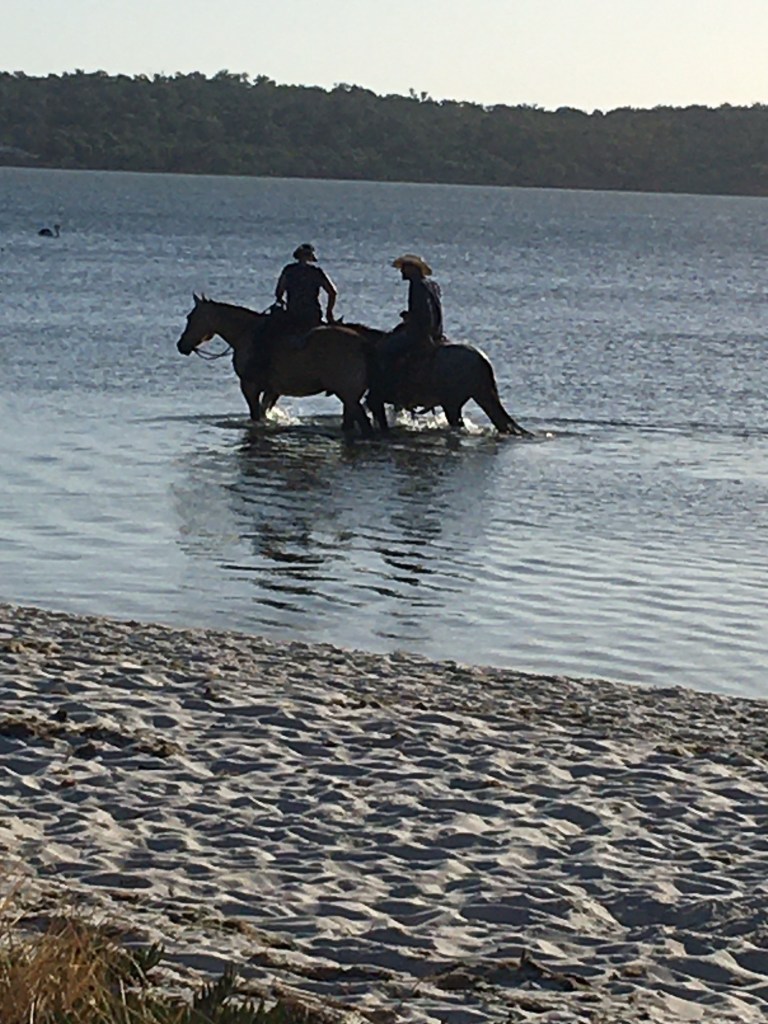
This weekend gone by, I camped at Herron Point, just south of Mandurah, Western Australia. It is located on the ‘estuary’ and is well known for ‘crabbing’. The campsite was very rustic. West Australian grey sand in the campgrounds, with pristine white sand on the estuary foreshore. Thankfully there were many shaded trees for cool comfort as a warm easterly wind blew most of the time. Whilst some children swam in the estuary, there are signs suggesting people refrain from doing so after floods as there are elevated levels of nutrients in the water. I erred on the side of caution and simply waded to cool down. ‘Crabbing’ adults wore rubber trousers.
Setting up my new swag, table, chair and cooking area took 20 minutes. Time to explore before a friend arrived later that evening. Children and their fathers carried nets and buckets whilst searching for crabs, whilst mums sat on chairs in shallow water. The sculpted shoreline ran in bays with an occasional long stretch. Dried sea plant life lay in clumps along the beach and gnarly dead trees, roots exposed, provided interesting contrasts against the skyline. Pelicans abounded and at times could be seen in large groups feeding from the water below. Red hot orange skylines ended each day, whilst pastel pink, blue and mauves welcomed them in. With so much activity, the campsite was asleep not long after 9 pm – but was in full crabbing mode again at 6.30 am. By 10 am Sunday, ours was the only campsite remaining.
My dog had eaten all her dry food the night before, so I suggested we go into Mandurah for a quick shop. On our return, I recalled a family holiday on the river near Yunderup when I was young and on a whim we decided to explore. It was winter when my parents and grandparents rented a weatherboard shack from a wharfie mate of my father’s. Campbeds in a sleepout, rough wooden floors, a wood stove, tea tree bushland and a jetty on the river made it a rare magical time. I remember the men fishing for cobbler in the gloomy black water of night, hurricane lamp burning nearby. Those jetties are still there. So are some of the more modern shacks. But mansions have also shot up, as have white picket fences, and a large number of river craft. The fish are few.

We walked along a river path, my red cloud kelpie exploring the water’s edge and occasionally falling in. The placement of chairs, and gates, and signs, telling the story of how people now lived their lives. I enjoyed the juxtaposition of carefree, communal living with displays of more modern single minded ownership.
This was my first foray in crafting an independent life that I hope will eventually be filled with activities and people and places I really enjoy. It took time to feel comfortable with my start. I learned it is important to follow the impulse to explore, to write, to read, to sit and to chat. I learned I could organise new experiences that were outside my comfort zone but not so far out that I wouldn’t begin. I learned that slowing down and listening for what feels right for me supports a great time. I learned that I might quite like exploring country towns and the people who story them. I learned that if I make a start and don’t shut the endless possibility of my mind down with judgements and criticisms, new ideas and thoughts of ‘what next’ emerge. I learned that my choice of which thoughts to follow determines the quality of the life I lead. Which do you choose?
 Georgina Mavor