Muffled

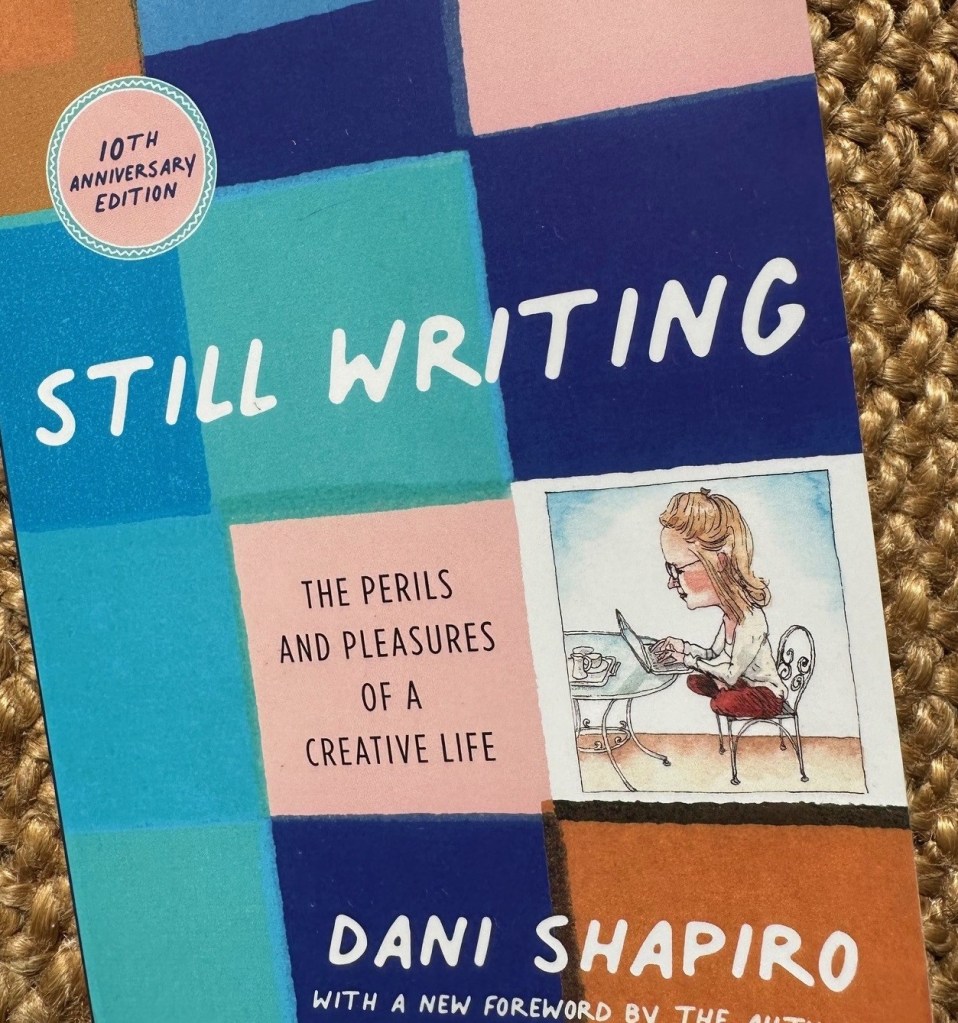
In her book ‘Still Writing – The Perils and Pleasures of a Creative Life’, Dani Shapiro writes about her overuse of the word ‘muffled’ in one of her novels. She realises that in unconsciously repeating the word, she is not close enough to the interior life of her main character.

None of us are close enough to the interior life of the main character in our lives – ourselves. Socialisation, early attachment, temperament, and life experiences all play a significant part in creating psychological obstacles to that realm. We develop habits in keeping ourselves distant from it and we learn ways of communicating and relating that come from thoughts filed away in heads guillotined from what we know in our being.

Earlier last week I was interviewed for a counselling position servicing people with extensive needs. I was asked if I had worked with people who lived with Disassociative Identity Disorder or PTSD. Instead of talking about my lived experience of working with these clients, I spoke from the head, and as I spoke I could feel the energy of genuine conversation depart.

Why did I not talk about my experience with listening? About my experience with hearing each person’s story and validating their hero’s journey with survival? With the difficulties in countering the medical model’s interpretation and the sense of hopelessness it brings? With listening for small ‘windows’ in which to open up different ways of understanding? Of the challenges in creating a safe space and of the stretch I must make if I am to grow enough for them? And all this before embarking on the tools and techniques psychologists are trained in.

Because I forgot to get close to my interior life, the repository of what I know from lived experience. I had forgotten to have a conversation with myself in my journal about what I know about my work with this client group. I had forgotten to harvest my experience; my knowing; my wisdom.

Whether we are writing a book, or being interviewed, or parenting children, or talking with our loved one, none of us escape the potential to fall into the trap of evading the depth and breadth of our own interior life. And when we do, we don’t ‘ring true’. Our words don’t resonate, not with ourselves, nor with others.

Journal writing has been my portal for getting closer to and clearer from my interior life. That job interview reveals I have further to go. How can we talk about what WE consciously know if we don’t turn to the vast amount of unconscious material within and ask? A job interview is not the place to explore what I know. There isn’t the time – to develop rapport or to follow trains of thought until wisdom is revealed. The stakes are too high. And not enough inner exploration has been done to truly ascertain ‘fit’.

Whenever we need to relate to another about something important, it’s important to distill our inner reality about the situation before we embark upon an exchange of feelings, needs, and wants. What is your truth about your relationship with a job? Another person? A responsibility? What needs and wants are tangled up with that ‘other’? Should they be met in that relationship or elsewhere? What might the ‘other’ want from you? What do you want to give?

If we don’t take time to explore our interior lives we can present as ‘muffled’ or at the other extreme ‘rigid’. Familiarising ourselves with our interior realities provides a starting point, one that feels ‘real’, and one from which an exchange, an openness to altering, can occur. Get closer to the interior repository of your lived experience. Write about it, explore how the threads come together and reap the insights that land – before sharing it with another.


Perspectives Are Equal Until Depth

Artwork by Ilaria Valtolina

Have you noticed how some of us can spend too much time talking about what others have said or think about us, and what we do, whilst we pay significantly less attention to our own perspective? Imagine an art class. In the centre is an object or person to be drawn or painted and on every student’s easel is a unique and different perspective, one of which is our own. Time is spent looking at and absorbing each, sensing for the nuances captured in each representation. How much we could learn from this process. When I hear people caught up in other people’s perspectives, I wonder what happened to their own? Why was it discarded so quickly?

Many decades ago, during my own journey in the Family Court, the standout piece of advice my lawyer offered was to stand up for what I believed in. Even if my perspective wasn’t deemed by judges in the end to be the ‘soundest’ one, my lawyer was of the view that to have stood up for what I stood for, was better than asking myself ‘what if’ when it was all over. I took that advice and gave my perspective at least equal standing to that of the other party. I hung on to what I knew was true for me – until I heard anything to the contrary that would change that perspective, which did occur every now and then.

Everyone has a separate perspective (reality) on everything in life, and we all have separate perspectives even when we are looking at the same thing. To ‘hero’ one perspective over another reflects a misunderstanding of the fact that everyone is creating their own perspective, their own reality in the moment and none have any greater accuracy or validity – until something deeper is heard. And that can only occur if initially both or all perspectives are given equal space of our minds.

The next time you find yourself emphasizing what another person says or thinks or does, stop, turn inwards and consider what you think. What’s your truth? Hang it on the wall of your mind alongside others. What in your perspective feels true? What evidence do you have? We are all brushing up against the ‘elephant’ of life. It is bigger than a lifetime will allow us to know completely. No one person can.

And if someone else doesn’t want to hear what’s in your perspective, then they suffer the same error, only in reverse. They ‘hero’ their perspective over others.

Every artist begins as a beginner. Every artist must begin. Every artist must put something on the canvas in order to begin the process of going deeper … seeing something different … more nuanced …more truthful. The same applies to the palette of our mind. Begin with what you know. Begin with your truth. ‘Hero’ it just as much as you ‘hero’ the perspective of others. And when you hear something more truthful, allow it to touch the canvas of your mind and imbue your truth with depth.

The Fork in the Road

As I near sixty, maintaining fitness and health is important. And as my daughter nears 16, developing a fitness and health habit will serve her well. So we both regularly ride our bikes around a lake nearby, the total journey being about 10 kilometres.

IMG_0680There is one point at which the path diverges, the path to the right taking a more meandering journey closer to the lake’s edge, whilst the one straight ahead melds through a grove of beautiful ghost gums. I always take the path to the right because I think that path is the longer route. Whilst my daughter believes the one straight ahead is the longest.

On Sunday we went riding and as usual, she was ahead of me. As she hit the ‘fork’ I wondered what she would do knowing that I prefer us to the take the path to the right. She sailed straight on. My immediate thought was, “Rascal, she knows the path to the right is longer, she is so lazy!” And then this thought entered my mind. ‘No she’s not, she simply believes that the path to the left is equally as long and is living out of that belief .’ Bam! I could see what I was being shown. She was innocently living out what she believed to be true, no extraneous thinking in there at all. (Thank goodness she was doing that and not getting caught up in anxious thinking about what I believed!)

I saw the truth of what I heard. There was no malice in her taking her path, just alignment with her thinking. If there was anything other than that, I would have seen a different behaviour from her. Instead I saw a healthy young woman on a bike, her long tanned muscular legs effortlessly pedal her away as she enjoyed her surroundings. She was living in the flow of her beliefs – as I am when I take the path to the right.

We are all doing this. Living out the thinking we believe to be true. We are all unconsciously living out our thinking. We only wake out of that dream when the thinking we are living from doesn’t serve us. Who knows whether our beliefs are true. What is true, is that our beliefs enable us to navigate life effortlessly … until they no long do.

On the one hand it can be helpful to see that we are all living out of a set of made up beliefs. The deeper ‘gem’ in this anecdote however was the moment when a fresh thought came to me about what was really going on when my daughter stayed true to her ‘path’. Hold our thinking about others (and life) lightly and we maintain a connection to a deeper source of thought that in the moment supports us to transcend our beliefs and avoid some of the problems that occur when we hold tightly on to them. At the core of all conflict is at least one belief that we assume to be true and a disregard for the wisdom that surfaces to save us  – because I know it does.