I know that educating people about the 3 ingredients that create human experience is a powerful pathway to increased feelings of wellbeing, clearer decision making and creativity/wisdom in living. However, that understanding is a radical shift in how we have learned to think about ourselves and life.
Whilst everyone has experience of what I point them to (because it is true for everyone), the way that we use thought (focus and content), gets in the way. I know the presence of the latter by its feeling – flat, fearful, low, anxious, busy, overwhelming, arrogant, angry, hesitant, timid, and more. They are created from our learned use of thought.
As sessions progress and people feel safer, their learned thinking wanes and their minds open to the understanding I bring. Safety allows thinking to calm. As it calms, we come home to a more natural state. Warm feelings, wisdom and clarity unfold and navigating life becomes way less effortful.
People generally enter sessions seeking a calmer and happier state of mind. That can’t be achieved with the thinking creating the busy and unhappy state of mind. The mind needs to slow down if insights, realisations and common sense steps are to be recognised.
I like to write in a journal. In my journal I have learned how to calm my mind and how to reap the treasures that lie within.
One journal activity I have found particularly useful to calming the mind is a strategy taken from Positive Psychology. I initially read about it here. It emerges from the observation that people tend to focus on the negatives in their day and/or create negative interpretations of the expressions of life manifesting around them.
This brief journaling technique turns our attention in the opposite direction to our learned habit. The instructions are simple. ‘Spend a few minutes at the end of the day making a list of 6 – 10 moments throughout the day that you appreciated for some reason or another.’ And when you wake up, try and remember as many as you can. After a week or so, increase the number to 12 – 20.
The purpose of the activity is not to test your memory. It is to change the habit of how you use attention and thought. In the process you will also experience the truth that your body feels what you think and that our external circumstances do not create our feelings, even when they are tough. The practice changes the wiring in your brain breaking the strength of its learned automaticity. It also has the potential to create a change in your awareness of how your experience is created. And … in the move to feeling better, you create the conditions for you to experience more of your innate intelligence, wisdom and creativity. The warmer our feelings, the closer we are to living from ‘home’ – before our conditioning.
If you are consistently feeling low, I offer this idea as something to try. But if it doesn’t appeal, then ask yourself ‘what can I do to slow down and come home’. The natural wisdom inside you, inside everyone, will guide you in your own unique way.
Image courtesy of @lucaupper Unsplash.com
 I talk with my school aged learners about what they do in class when they make spelling mistakes. Do they get a feeling in their body that something is wrong? Do they listen to that feeling and go back to the word or do they ignore it? They look at me quizzically. I then tell them that that feeling is their inbuilt ‘diviner’ for navigating life. Listen to it when spelling and not only will spelling improve but they build an important habit to guide them when out in the wide world on their own.
 It has taken me a while to see this folly clearly and to consciously move through it. Years ago, whilst living in an uncaring, unhealthy relationship, I changed from a confident, independent, professional woman to a frightened, confused shell of my former self. I shivered within but pretended to the outside world that I was okay whilst at the same time withdrawing from everything that supported me, nourished me and reflected who I truly was. My thinking stalled me (for a number of years) and the mess worsened. Eventually, I responded to what I was doing to myself, disconnected from the relationship and slowly reconnected with affirming activities and people.
 Over the years, my relationship with wisdom within has become more direct; my ability to recognise the interference of my conditioning more astute; and my courage to follow thoughts I previously discarded greater. Insights from wisdom within can come at any time, but in my experience can be cultivated through conscious journalling, whether that be to nudge my ‘mouse in a wheel’ thinking aside, to see the pervasiveness of a deeper belief in my life, or to explore new frontiers of understanding. Below, I offer a few pointers to help women use personal writing to become more conscious of their innate uncontaminated stream of wisdom, the source of all positive change and true liberation.
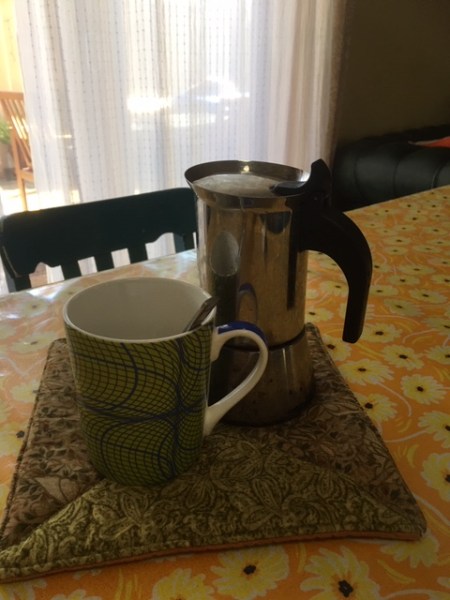 kitchen, I am reminded of the coffees I used to purchase in cafes before COVID 19. Purchased when life was driven by the next client, the next meal to shop for, the next swimming training for my daughter, the next chore to be done, the next, the next, the next. Forever chasing the ‘next’ was normal and purchasing a coffee was my daily ‘reward’.
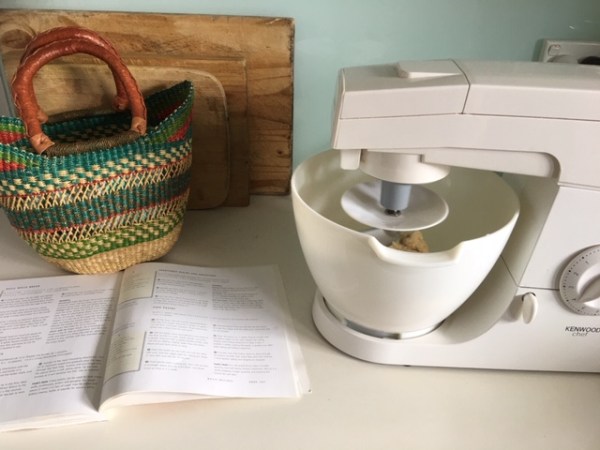 Next to the breadbasket is my mother’s old Kenwood Chef. Years before, I had sequestered it to make bread after being inspired by my ex baker neighbour. Unused, it has sat on my kitchen bench like an ornament reflecting something I didn’t actually live. In my mind, an aperture of clarity appears. I see that the habitual impulse to keep doing the ‘next’ takes me away from being present. Of simply listening to the here and now things I could do with what I already have in my home, of the here and now things I just need to do in my workplace, and of the here and now presence I can bring to my relationships and friendships. Instead of my habitual impulse filling up my mind with things to do, I realise I can pause and allow my mind to open up to what wants to come forth from within.
 Georgina Mavor