Mess

Sometimes we make ‘thinking’ mistakes about the mess in our lives.

That thinking can cause more damage than the mess itself.

That thinking can bring the living of our lives to a halt.

Mess is just mess, problems to sort out, and move through. But if we mistakenly think that mess is a reflection of something negative about ourselves, i.e. we make a detrimental judgement of ourselves based on the mess, then we increase the risk of shutting down our capacities for resolving the mess and instead replace it with shame. Shame shuts us down and we get stuck.

FootpathIt has taken me a while to see this folly clearly and to consciously move through it. Years ago, whilst living in an uncaring, unhealthy relationship, I changed from a confident, independent, professional woman to a frightened, confused shell of my former self. I shivered within but pretended to the outside world that I was okay whilst at the same time withdrawing from everything that supported me, nourished me and reflected who I truly was. My thinking stalled me (for a number of years) and the mess worsened. Eventually, I responded to what I was doing to myself, disconnected from the relationship and slowly reconnected with affirming activities and people.

I run a small and hopefully nurturing life writing group for women. Writing our stories and voicing them allows us to explore and experience deeper and bigger definitions of ourselves. Being part of a nurturing and accepting group also offers each of us affirmation and the possibility of ‘hanging in there’ when our lives slip into mess.

I suspect no one avoids periods of intense mess in their lives. We can slip into it in the blink of an eye. Many of us think we are the only ones in a mess. This is not true. Mess happens. And when it does, it’s important to stay actively connected to people, groups, and activities that affirm who we are.

We are not the messes we find ourselves in. We are the person that others like, that others invite into their lives, that others call on the phone, that our dogs love, that our neighbours say hello to, that people recognise on the street, that others care about. Be that person and ways to navigate through each mess will become clear. Judge yourself negatively on the basis of the mess and know that it is not the mess that has done you in. Your thinking has.

Discontent is Just a Habit

Malcontent, or discontent, is a habit in thinking. Even if you personally think it isn’t, does it matter? We all create our feeling states via the thinking we host. Those thinking states translate into behaviours – including the ones that don’t help us get on with life. We all have periods of discontent. So what? My conclusion with my own moments of moroseness is to do something that ‘gets on with my life’. How I feel is irrelevant.

Catherine Deveny, in her book ‘Use Your Words‘, has a chapter on another habit, ‘Procrastination’. Whatever reasons we make up about why we procrastinate, her point is that in real life we can’t avoid the need to do things to keep our lives going. If we indulge our habits, that indulgence incapacitates.

Notes tim-bish-Irvc7o5Bang-unsplash

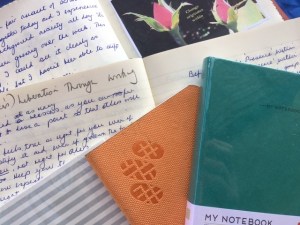
Deveny suffered from depression. In a desperate attempt to get better she bought $350 worth of self-help books. In one of them, she found this little nugget – ‘pocket notes’. Turns out that writing a little note can provide an antidote to a bad habit. Carry it around and look at it a number of times during each day. You might be surprised at the impact.

In my world of understanding, that note acts as a circuit breaker, distracting your thinking from its habit, and frees your mind to consider alternatives. Follow the circuit breaker and you break your connection to the thinking behind the habit. You break your habit of indulging your habits!

The example about ‘pocket note therapy’ Deveny quoted pertained to weight loss but it got me thinking about what my ‘pocket note’ could look like for discontentment.

‘Leave your morose thinking alone – it’s not important.’

‘Do one thing to get on with life before you give in to inaction – every time.’

‘Turn off the TV after an hour.’

‘Only use Twitter to post information – no surfing.’

‘When you feel like a glass of wine, drink a large glass of bitter lemon and water.’

If I follow my ‘pocket note’ every day, my life moves forward. I am more creative, I meet new people, my relationship with my daughter is closer and I feel more energized. My only commitment is to follow the advice when discontent surfaces – as it will. Much, much better than feeding the habit of malcontent. What’s the habit that stalls your life – every time? What simple actions could your ‘pocket note’ contain? Are you willing to give it a go?

Photo by Tim Bish on Unsplash.

(Women’s) Liberation from Within

Everyone has a voice within that is fresh, strong and free. Conditioning is the barrier to its expression. Conditioning around gender inhibits the freedom to be who we are, for both women and men. This post about how women can use writing to move beyond the conditioning they experience.

If women have been raised to believe that they don’t have the intelligence, power or place to make the big decisions required in life; to express views that run contrary to the dominant culture; or to unsettle; then they are silenced – from within. These learned unconscious beliefs form a restrictive mindset through which women’s personal thoughts are shaped and expressed. It also interferes with hearing innate wisdom in important realms of life, whether that be in regards to parenting, keeping safe, expressing creativity or developing financial independence.

Thankfully, wisdom emanating from the quieter corners of ourselves can at times be loud, loud enough to be heard, and hopefully loud enough to be followed. These ‘flag waving’ moments point to the existence of a powerful stream of thought, unpolluted from conditioning, that for most is unknown and untapped.

IMG_1109Over the years, my relationship with wisdom within has become more direct; my ability to recognise the interference of my conditioning more astute; and my courage to follow thoughts I previously discarded greater. Insights from wisdom within can come at any time, but in my experience can be cultivated through conscious journalling, whether that be to nudge my ‘mouse in a wheel’ thinking aside, to see the pervasiveness of a deeper belief in my life, or to explore new frontiers of understanding.  Below, I offer a few pointers to help women use personal writing to become more conscious of their innate uncontaminated stream of wisdom, the source of all positive change and true liberation.

Practise going deeper through writing. Practise ‘brain dumping’ the type of thinking you do all the time and ignoring its seriousness. Practise feeling for thoughts that feel heavily pregnant with newness, freshness and rightness. In personal writing that takes you deeper, you are not deliberately creating new thoughts or regurgitating those of others (although you may refer to them), you are allowing your own untapped potential to unfold. By opening up (discarding the thoughts you usually do), something new naturally surfaces. You simply have to wait, feel, listen and trust.

  1. Write when you feel troubled, something in your day ‘sticks’ with you, when you have a question, or when you have an ‘aha’ moment and see something more clearly.
  2. Write what you know – what you see, think and feel. Stay with what is real. Give voice to what you know fearlessly, with no critic, no thought police – just write your truth. You want to get into a stream of writing that feels like it gets closer and closer to the voice of you without the voices of your acquired conditioning.
  3. Accept what you have written and don’t engage with self-doubting thoughts that arise. Experiment. Leave your writing at that point and go about your day living in the acceptance of that truth.
  4. Don’t fall into justifying your truth. You don’t need to. Your truth is valid.
  5. Write about what is right for you and stay out of writing what should be or would be right for others. If you stay with writing about what is right for you, your mind will naturally go deeper into a depth of you previously unexplored. We become richer human beings through tapping this unique vein. Deviate into writing about what you think is right for others is simply a learned habit that takes you away from you.
  6. Go deeper into what feels right for you. If questions arise that relate to you, follow those threads, but again, don’t deviate into writing about others. Accept what comes.
  7. If your usual ‘mouse in the wheel’ thinking is so strong that you can’t move beyond it, then vent it on the page. This type of ‘brain dump’ can serve to ‘unblock the pipes’. But it is not where you will discover something new from within which when revealed, leaves you with a deeper sense of who you are. Like a water diviner, you want to get below the surface, locate the ‘mother lode’ that is you and tap it.

I hope these ‘pointers help. They represent what I have learned over decades of journal and personal writing enhanced through an encounter with an understanding of thought, innate wisdom and feelings of peace and presence as universal human ‘divining rods’. Slow down, go within through writing, and slowly your life will change. Probably not along the fast, consumer-driven pace of life that society espouses, but assuredly along innate unique truths that support human health, compassion and contentment.

Opening Up Instead of Filling Up

As the aroma from my small traditional Italian espresso coffee machine permeates my IMG_1099kitchen, I am reminded of the coffees I used to purchase in cafes before COVID 19. Purchased when life was driven by the next client, the next meal to shop for, the next swimming training for my daughter, the next chore to be done, the next, the next, the next. Forever chasing the ‘next’ was normal and purchasing a coffee was my daily ‘reward’.

Now, as I pour warmed milk into two mugs, a warm air wafts through the open window and I hear my neighbour weight training in his garage. ‘Outside’ life is establishing itself in our homes. Life feels calm and wholesome. I glance at the bread basket on the kitchen bench next to me and see two remaining slices of rye bread. Automatically, an impulse stirs in my body. It’s an impulse to grab my car keys, walk out the front door, start the car and drive to the local supermarket to buy a loaf of rye bread and probably three to four other things I don’t immediately need but the purchase of which would provide the feeling of being ‘ahead’ of my ‘to do’ list. Whoa. In an instant the feeling of calm deserts me.

I pause. That impulse to rush out and buy was immediate and automatic. In a flash of understanding, I realise how ingrained this learned habit has become and I see the full extent by which I have lived my life by it. Hot on the heels of that ‘waking up’ I also know it is a dead end dirt track I no longer wish to travel. I feel slightly downcast.

IMG_0995Next to the breadbasket is my mother’s old Kenwood Chef. Years before, I had sequestered it to make bread after being inspired by my ex baker neighbour. Unused, it has sat on my kitchen bench like an ornament reflecting something I didn’t actually live. In my mind, an aperture of clarity appears. I see that the habitual impulse to keep doing the ‘next’ takes me away from being present. Of simply listening to the here and now things I could do with what I already have in my home, of the here and now things I just need to do in my workplace, and of the here and now presence I can bring to my relationships and friendships. Instead of my habitual impulse filling up my mind with things to do, I realise I can pause and allow my mind to open up to what wants to come forth from within.
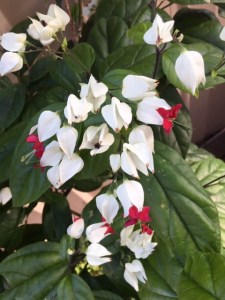
For a brief moment I see the disparity between the mindlessness created by the automatic impulses I have IMG_0996learned,  and of the lifechanging and life affirming richness of mind that opens up if I pause and let habitual impulses pass. I breathe. This is a deep turning point. Thoughts arise about the week ahead and how I can take this new found clarity into my working and living life. The word ‘notice’ wafts to the surface of my mind. Just notice the feeling of that automatic impulse and pause. Be present, and contentment within will respond.

The Gentler Things in Life

I sit at my writing desk, looking out the window at the bushland beyond. Rain was forecast. Instead, we have the usual dry ground and stillness in the air.

This week I realized that COVID 19 restrictions have erased the ‘softer touch’ people interactions that counterbalanced the demands and responsibilities of my work, homeschooling, and maintaining the haven I call home. Gone are the sparkling eyes, laughs and ‘ocker’ banter of the Vietnamese lunch bar proprietors; gone are the smiles on the fresh faces of young women, in 50’s attire, hair bound with scarves, at my favourite cafe; and gone are the unexpected encounters at the local supermarket with characters I recognize from my working-class neighbourhood. Small interactions that provided a counterbalance I didn’t have to rally to my overwhelmed mind are now missing.

IMG_0752I know that the mediator to all experience is my thinking. Pre COVID 19, there was enough ‘wiggle room’ awareness of what I was hosting in my mind to let go of ‘angsty’ thinking when it arose. But things are different now. With the COVID 19 restrictions, I have lost those nurturing, interactive moments that effortlessly ignited positive thoughts to warm my heart and maintain my proximity to inner contentment. Now, my public and sometimes working life ‘living landscape of people interactions’ is more often tense and abrasive. Without the everyday ‘softer touch’ people interactions, my ‘wiggle room’ has silently departed and my mind has meandered into the wilderness.

How to counteract what I now see so clearly?

An overseas friend, a terrific, warmhearted woman and a kindred spirit (living in much tougher circumstances than my own), has suggested we videoconference for an hour, once a week, just to take time out, to talk about how we are going, to listen and to laugh. Imagine how different life could be for many if we initiated the same with one other person and invited them to do the same with another. Two hours a week to consciously spread care and warmth. An act of kindness that it is so needed by those who live alone and don’t have the buffer of another caring adult in the home. I already have my ‘one other’ in mind.

My second commitment is to say hello and to smile at all those I pass as I walk my dog and ride my bike. Partners walking their golden retriever, terriers, and dachshunds, and fathers helping their little ones to ride small two-wheeler bikes now regularly appear on the firebreak bordering the Australian bushland across the road from my home. All wave from a distance and say hello. State housing commission tenants imbibing from large Pepsi or Coca Cola bottles on their front porch also say hello. These small acts have lifted my spirits. I intend to ‘pay it on.’

I also notice those blogs, videos, tweets, pictures, and posts that calm and nurture versus those that further intellectualize or deliberately manipulate our lived experiences of life under COVID 19. The latter creates a ‘tighter’ feel within. They don’t reflect the breadth of thought we experience and nor do they align with all that makes us human. Vast expanses of joy, sorrow, laughter, compassion, anger, and fear roll, like thunderous waves in a storm through our psyches. Narrow apertures can not contain nor shape the truth of our inner worlds, and nor do they provide the balance that ‘softer touch’ interactions gift to peace of mind. Instead, they take us further away from inner contentment and add to an increased sense of unnamed angst. We need counterbalances that reflect a fullness to life. My final commitment is to feature ‘softer touch’  moments I encounter, ones that automatically ignite the heart, and nudge angst on its way. The sparks that resonate with being fully human needs fanning.

Rain now falls outside.

Clarity from A Contented Mind

Clarity from a contented mind changes everything. It has been the source of all the great medical and scientific discoveries throughout time, and it can lead us through our current COVID 19 crisis – if we let it.

Out of the state of a contented mind, insights surface. It is the insights we release through our deliberate efforts to quieten our mind that will guide us through this pandemic and ultimately leave their mark on the life that we have led. We all do an enormous amount of thinking in a lifetime, but not much of it leaves a mark worth noting. Clear thoughts, clarity that takes us beyond what we previously understood, whether that be in our parenting, our work, the way we live our lives, will leave a mark. They are the thoughts that change lives, for ourselves and others.

IMG_0882 (002)

All of the clear thoughts I have acted on since COVID 19 began have unfolded from a contented mind, one not in angst with itself. They come when waking from a fresh night’s sleep; whilst pottering in my vegetable garden; whilst riding my bike around my local lake; whilst showering after a day’s work in the garden, or whilst walking my dogs in the local bushland. They certainly don’t come when I am in supermarkets, current epicentres for all our non-contented thinking.

COVID 19 is forcing us to slow down and live simply. We have a choice, panic and rev up, or slow down and listen deeply to what stirs from within. I feel and live better when I rest from the former and cultivate the latter.

Wellbeing is in a Nice Feeling

IMG_0742Last night my daughter and I went to see the feel-good movie, Little Women, at a feel-good venue, Burswood Outdoor Community Cinema. It was a magical evening. A cool breeze swept up off the nearby river as people began to line up, picnic baskets in hand, half an hour before the doors opened. People greeted each other warmly as they found friends, whilst strangers struck up conversations and families gathered at communal barbeques and under pagodas nearby. I stood in line to buy tickets and was shortly joined by a woman who turned out to be the Marketing Manager for European Foods, a major sponsor of the yearly event.
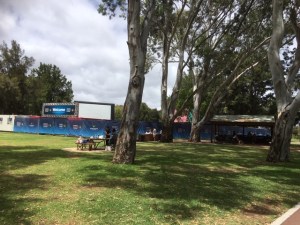
We began to talk and when she found out I hadn’t purchased my tickets,  she offered me free ones! The company had purchased 300 tickets for staff, clients and members, and as not all had been taken up, I was the very lucky recipient of a free double pass. I was so grateful, people can be so generous, even to strangers. After booking our bean bags, my daughter and I moved inside and made ourselves comfortable. I had already cooked our food, and after purchasing drinks we settled down for our own pre-movie snacks and meal.

IMG_0737Whilst eating, a warm-hearted young lady came by selling tickets as part of the cinema’s fundraising efforts. Every night, for the duration of the summer program at 4 cinema outlets, volunteers sell tickets, run the food and drink outlets, distribute beanbags, show the film, clean up and probably much more than I am aware of. They are amazing and their generous spirit makes a huge difference to the feeling that permeates each screening. This young lady went on to tell me that she volunteers three nights a week at two of the outlets plus she volunteers at Edmund Rice Camps WA for disadvantaged children. She was so enthusiastic and I have no doubt she has coopted others to join her in her community building activities.

The movie began and the crowd was immediately captivated by a fresh take on the classic tale of the struggles and lives of four sisters. I was drawn into the writing life of the main character, Jo March. I found myself yearning for a time when screens and distractions weren’t around to intrude on the writing impulse. The possibility of writing a novel is not one I have yet stepped into but nib pens, ink bottles, secluded space and candlelight certainly make it enticing.

How lucky we are to live in a time when we have so many stories to tell (and write) if we have had the faith to live them. Possibilities for our stories certainly go way beyond the story of our ancestor Homo Erectus thousands of years ago. “I stood up” doesn’t make for a rich story but that impulse to step out beyond the usual is the same that flows through us now. The life force that flows from a place of wellbeing within drives our stories. All that has unfolded since then has come from that space.

Creating, living and writing spirited stories takes a willingness to listen to the depths of our being and to follow through. They come from a garden bed of good feeling and wellbeing within everyone. I am very blessed to hear the stories of the women I write with and also to be part of the life story creating journey of the young people I mentor about psychological wellbeing. Sometimes we need help to know that our life stories beyond our conditioning are worth pursuing and unfolding to fruition. Sometimes our young people need help to bring their own version of Jo March into being.

Who knows what has unfolded from within the people who were at that feel good movie in a feel good setting last night. Coming alive from the inside can happen anywhere, anytime. It is however sown in a good feeling. How lucky we are to live in a society that fosters that.

Slice of Life

In a recent FB post, I pointed to the existence of innate wisdom in us all and, when we are in a relaxed frame of mind, its emergence as a shift in consciousness. Wisdom can unfold at any time, regardless of whether we are in the presence of an experienced practitioner or not.

Today, however, I’d like to highlight the value of hanging out with experienced practitioners, whether one on one, in groups or via books, podcasts or blog posts. Each person (practising in this field or not) who has had a deep insight into the principles behind our experience of life has had a momentary, intimate experience with/exposure to a small slice of a much bigger phenomenon. We are like the blind men bumping up against an elephant, describing what they claim to be the entire beast and not realising that the entirety of the best cannot be fully grasped in one small handspan. Yes, what they encountered was the beast, they got a glimmer of it but not its entirety. As have people who have had a deep insight into a sliver of the principles by which we create our experience of Life. At that moment, they brushed up against the nature of the principles but not their entirety. And nor do we need to. Syd Banks always said ‘explore the nature of Mind, or the nature of Consciousness, or the Nature of Thought, and you will find your way, because they are all the same.’

IMG_0686Some time ago, in a mentoring session with a client, the client broke down at the thought of a family member’s unthinking remark. What I initially brought to that moment was what I have seen about the innate existence of wisdom in us all and how it played out in that scenario. The activity of innate wisdom is my slice I have seen deeply. Other West Australian practitioners most probably would have responded differently based on their own deep insights. John Wood may initially have responded with an exploration into whether the thinking in that moment arose out of the realm of Possibility, or whether it was habitual, conditioned thinking from Impossibility. Terrie Sanders may have initially gently guided my client back into a good feeling because she has experienced deeply the power of that good feeling to change. Whilst Rolf Clausnitzer, being firmly grounded in the simplicity of the Three Principle understanding of the inside out nature of our experience, may have drawn attention to the fact that my client’s feelings were created from their thinking and not to take it seriously.

Initially, at least, each of us may have brought the slice of what we have seen deeply about the principles by which human beings create their experience of life to that moment in this mentoring session. And none of us would have been wrong. Where the session would have gone from there I don’t know. All of us know the infinite potential that every human mind can access. I do know however we would all have listened deeply.

So hang out with others, read books, listen to podcasts, and write. I’m not sure any human being can fully grasp the expansiveness and infinite nature of the principles behind Life but if we stay open and listen deeply, then wisdom within will respond and reveal a sliver that expands our slice of understanding. Our consciousness shifts from within and every time it does, we become more fully alive.

Before Understanding

IMG_0208 (002)Before understanding gravity and its influence on planets and tides, ancient people thought the planets were pushed around by angels and that supernatural forces governed the tides. People’s thinking was out of sync with the natural phenomenon of gravity. And from that thinking, misaligned behaviours followed. Ancient peoples, not understanding the earth’s rotation and movement of the planets, used to light fires on the horizon to attract the sun back each day. They were afraid it wouldn’t return.

However, once Newton articulated the principle of gravity, people’s thinking and behaviour changed. The ‘crazy’ stuff stopped. When how we think and talk about a natural phenomenon aligns with the truth about how it works, our behaviours become less ‘crazy’.

The same is true with the phenomenon of the innate wisdom that flows through every human being. It comes to us via thought and the more our thinking attunes to it, the more easily we recognise it in a feeling of ‘right’. Like the ancients who didn’t understand gravity and got lost in emotions, behaviours and habits that were misaligned with the phenomenon of gravity, so too do human beings get lost in emotions, behaviours and habits that are misaligned with the phenomenon on innate wisdom. In both cases, the erroneous thinking of human beings, before clear understanding, creates bizarre behaviour.

Adolescence is the perfect time to educate about the phenomenon of innate wisdom and the role of thinking in aligning with the principle of innate wisdom or sending us down rabbit holes. In adolescence, thinking capacities expand and our young people become more aware of the dynamics around them. When I work with those young people trying to make sense of their lives, they clearly see the misaligned behaviours in the adult circles around them, but (a) they don’t have the understanding to think about those behaviours in a way that makes sense, and (b) because no one talks about innate wisdom, they don’t look to that for validation and instead make up, and get locked into, all sorts of other stuff about themselves and their situation.

Adolescents experience innate wisdom about their contexts; they need space to voice what comes from it. Their wisdom or common sense needs to be validated, otherwise, we are ‘crazymaking’ them. Adolescents experience shifts in mood; the role of thought in that shift can be brought to awareness and adolescents can see they are not their state of mind. Adolescents know the thinking that sits under their anger, sadness and frustration; it often relates to power (or perceived lack of it). They need adults with an understanding of innate wisdom to help them to let those thoughts go and allow innate wisdom to mature their thinking and their way in the world.

We have a long way to go before the majority of humanity understands clearly the phenomenon of innate wisdom, but the change has started. Innate wisdom is active in everyone and can be heard in the words of many when talking about solutions to their lives. Unfortunately, with an absence of understanding about innate wisdom and the role of thought, we don’t think clearly about what is present and like the ancients, continue to get immersed in behaviours that don’t make sense. We need an understanding that allows us to think more clearly about what already exists. We need an understanding of innate wisdom and the role of thought so that our thinking about ourselves and each other aligns with innate wisdom instead of negating it. With a clear understanding, our innate mental health is worked with instead of fought against. With understanding, the ancients could stop lighting fires on the horizon to attract the sun. One day we too can stop engaging in crazy behaviours to attract mental health. We can all come home to truth.

The Fork in the Road

As I near sixty, maintaining fitness and health is important. And as my daughter nears 16, developing a fitness and health habit will serve her well. So we both regularly ride our bikes around a lake nearby, the total journey being about 10 kilometres.

IMG_0680There is one point at which the path diverges, the path to the right taking a more meandering journey closer to the lake’s edge, whilst the one straight ahead melds through a grove of beautiful ghost gums. I always take the path to the right because I think that path is the longer route. Whilst my daughter believes the one straight ahead is the longest.

On Sunday we went riding and as usual, she was ahead of me. As she hit the ‘fork’ I wondered what she would do knowing that I prefer us to the take the path to the right. She sailed straight on. My immediate thought was, “Rascal, she knows the path to the right is longer, she is so lazy!” And then this thought entered my mind. ‘No she’s not, she simply believes that the path to the left is equally as long and is living out of that belief .’ Bam! I could see what I was being shown. She was innocently living out what she believed to be true, no extraneous thinking in there at all. (Thank goodness she was doing that and not getting caught up in anxious thinking about what I believed!)

I saw the truth of what I heard. There was no malice in her taking her path, just alignment with her thinking. If there was anything other than that, I would have seen a different behaviour from her. Instead I saw a healthy young woman on a bike, her long tanned muscular legs effortlessly pedal her away as she enjoyed her surroundings. She was living in the flow of her beliefs – as I am when I take the path to the right.

We are all doing this. Living out the thinking we believe to be true. We are all unconsciously living out our thinking. We only wake out of that dream when the thinking we are living from doesn’t serve us. Who knows whether our beliefs are true. What is true, is that our beliefs enable us to navigate life effortlessly … until they no long do.

On the one hand it can be helpful to see that we are all living out of a set of made up beliefs. The deeper ‘gem’ in this anecdote however was the moment when a fresh thought came to me about what was really going on when my daughter stayed true to her ‘path’. Hold our thinking about others (and life) lightly and we maintain a connection to a deeper source of thought that in the moment supports us to transcend our beliefs and avoid some of the problems that occur when we hold tightly on to them. At the core of all conflict is at least one belief that we assume to be true and a disregard for the wisdom that surfaces to save us  – because I know it does.